
Last updated October 16, 2026
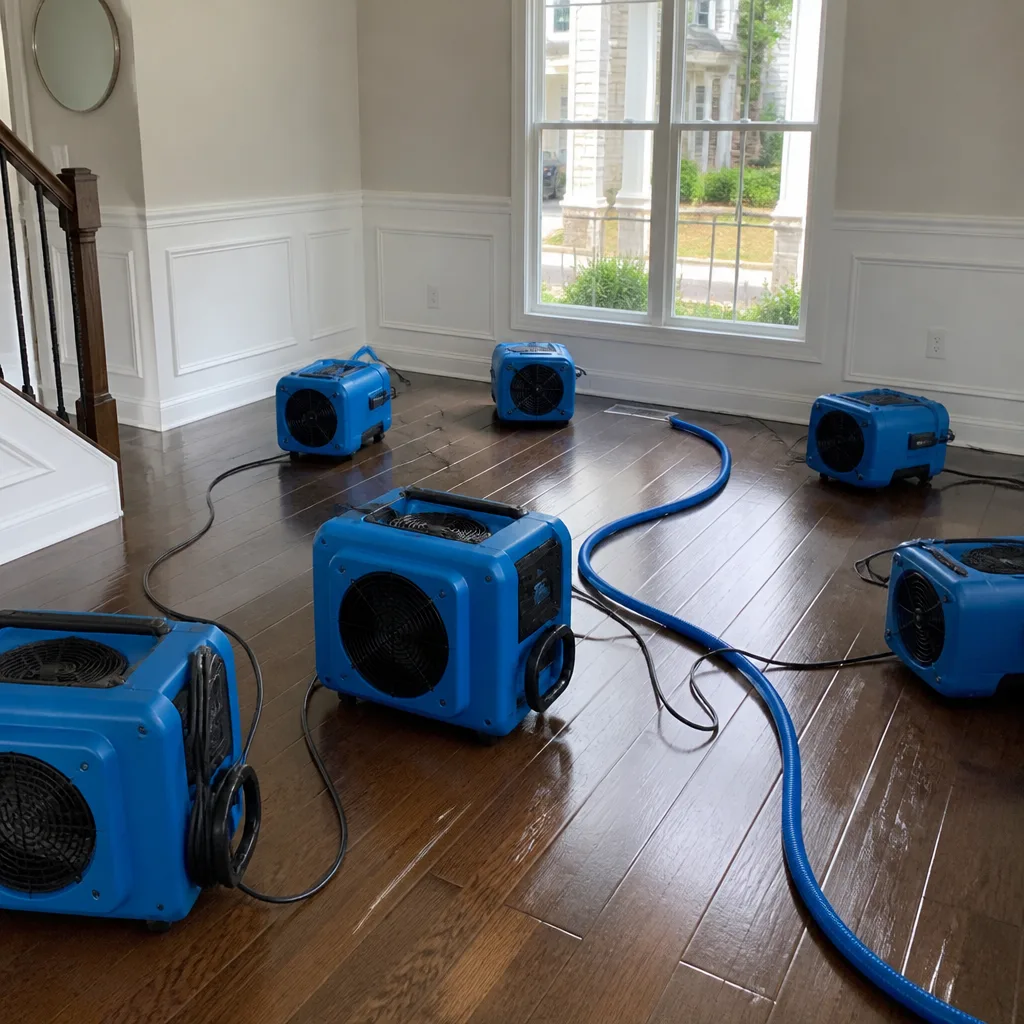 Water damage drying
 Fire & smoke cleanup
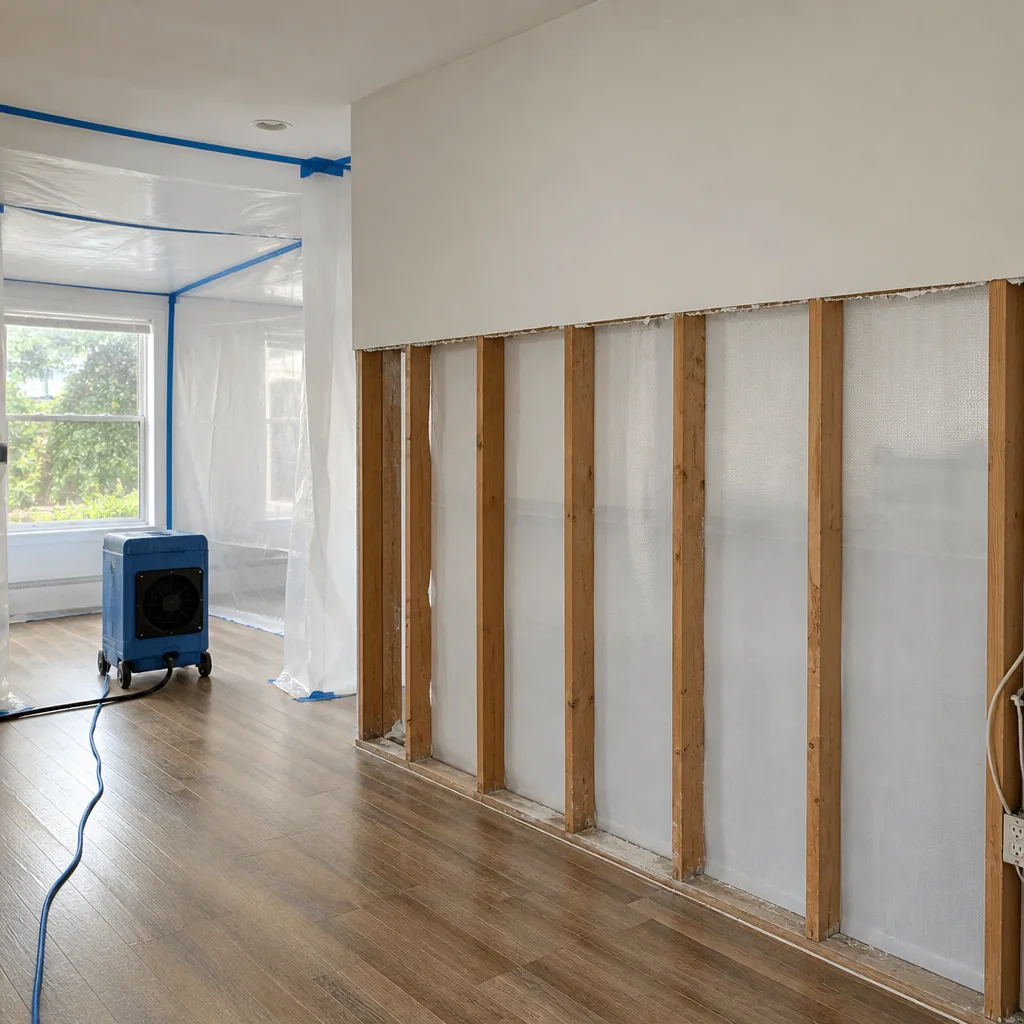 Mold remediation
 Storm response
 Sewage cleanup
 Reconstruction
Free visual inspection and a written scope of work before any mitigation begins - photos, moisture readings, and drying logs go in your claim file
The scope we write is the scope we bill. Anything new gets shown to you, in writing, before we touch it.
Get your free estimateDamage Restoration Permits, Codes & Inspections in FL: What You Need to Know
Three years ago, a homeowner in Miami’s Shenandoah neighborhood paid a contractor $4,800 to repair a water-damaged exterior wall. The work looked fine. Then, at closing, the buyer’s inspector pulled the permit history. Nothing had ever been filed. The sale collapsed, the buyer walked, and the original contractor’s phone number was disconnected. The repair had to be torn open, re-inspected, and redone with permits, costing nearly twice the original amount. This guide explains exactly which restoration projects in Florida require permits, how county rules differ across Miami-Dade, Broward, and Monroe, what the Florida Building Code demands for moisture-prone repairs, and how to verify that your contractor actually did what they claimed. For more guides & resources on protecting your Miami home, see our blog. If you live in Miami, the rules here are stricter than almost anywhere else in the state, and the consequences for getting them wrong are financial.
Quick Answer
In Florida, any damage restoration work that involves structural repairs, electrical or plumbing changes, or alterations to load-bearing components requires a permit. In Miami-Dade County specifically, even some non-structural restoration work, like replacing drywall in a moisture-damaged wall, can trigger permit and inspection requirements under the Florida Building Code’s high-humidity provisions. Most homeowners assume permits are the contractor’s problem. In Florida, they are legally the property owner’s responsibility, and an unpermitted repair can make a home unsellable and give insurers grounds to deny future claims.
Restoration work we handle
Table of Contents
- Why Permits Are the Homeowner’s Legal Responsibility in Florida
- Miami-Dade vs. Broward vs. Monroe: Where County Lines Change the Rules
- Florida Building Code Section 1203: Moisture Barriers and Mold-Resistant Materials
- Which Restoration Tasks Actually Trigger Permits
- How to Verify Your Contractor Pulled the Permits: The Miami-Dade Portal Walkthrough
- The Inspection Sequence: Rough-In, Framing, Insulation, Final
- Post-Hurricane Ian Documentation Changes for High-Risk Zip Codes
- What Permits and Inspections Cost for Restoration Work in Miami
Why Permits Are the Homeowner’s Legal Responsibility in Florida
When a contractor tells you they’ll “handle the permits,” that is not the end of the conversation. Under Florida law, specifically Florida Statute 489 and the Florida Building Code’s administrative chapter, the property owner is the party legally responsible for ensuring required permits are obtained. The contractor may pull them on your behalf, but if they skip that step, the liability lands on you.
We have walked into homes in Coral Gables, Kendall, and Hialeah where the homeowner genuinely believed the permit existed because the contractor said so. The drywall was patched, the paint was fresh, and the permit history was empty. This matters for three concrete reasons:
- Saleability: In Miami-Dade, title companies and buyer’s inspectors routinely pull permit histories before closing. An unpermitted structural or mechanical repair is flagged as a material defect. Some lenders will refuse to finance until the work is permitted retroactively, which requires opening walls and exposing the work to an inspector.
- Insurance coverage: If a water-damage claim is filed on a home with prior unpermitted restoration work, the insurer can argue the unpermitted work contributed to the new damage. That gives them grounds to deny or reduce the claim. This happens more often than homeowners realize, especially after hurricanes when adjusters are looking for reasons to limit payouts.
- Code enforcement liability: Miami-Dade code enforcement can issue fines and require corrective work if unpermitted construction is discovered, whether by a neighbor complaint, a utility inspection, or a property sale.
The practical takeaway: never accept verbal assurance. Verify it yourself, in writing, through the county’s permit portal. We cover exactly how later in this guide.
Miami-Dade vs. Broward vs. Monroe: Where County Lines Change the Rules
Florida’s building code is statewide, but the way it is enforced varies dramatically by county. If you own property in Miami-Dade, you are under one of the strictest code enforcement regimes in the United States. If you own a second home in Broward or a place in the Keys, the rules shift in ways that can surprise you.
Miami-Dade County operates under the Florida Building Code with local amendments through the Miami-Dade County Code of Ordinances. The key differences:
- High-Velocity Hurricane Zone (HVHZ) requirements: Miami-Dade and Broward are both within the HVHZ, which means stricter wind-load, impact-resistance, and attachment standards for anything structural, including roof repairs, wall sheathing, and window or door replacements after storm damage. Monroe County is also in the HVHZ.
- NOA (Notice of Acceptance) products: In Miami-Dade, many building products used in restoration, from moisture barriers to roof underlayments, must have a Miami-Dade NOA, which is a county-specific product approval. A generic product that is code-compliant in Tampa may be illegal to install in Miami without an NOA number.
- Permit thresholds are lower: In Miami-Dade, the threshold for what counts as a “repair” versus “alteration” is more aggressive. Replacing a section of water-damaged drywall that exceeds 25% of a wall surface can trigger a permit in some Miami-Dade municipalities, while the same repair in unincorporated Broward may not require anything at all.
Broward County follows the Florida Building Code with its own administrative provisions. Generally, Broward is less aggressive than Miami-Dade on interior, non-structural repairs. However, Broward municipalities like Fort Lauderdale and Hollywood have their own local amendments that can be stricter in coastal flood zones. The county line matters less than the city line in Broward, which is the reverse of Miami-Dade, where the county itself sets the tone.
Monroe County (the Florida Keys) adds another layer: FEMA flood-plain regulations are enforced more strictly than anywhere else in the state. In Monroe, a “substantial improvement” rule applies if restoration costs exceed 50% of the home’s pre-damage market value. At that point, the entire home must be brought up to current flood elevation standards, which can mean elevating the house. This is a uniquely expensive trigger that rarely applies in mainland Miami-Dade or Broward.
If your restoration project spans county lines, or if you are unsure which jurisdiction governs your property, confirm the local authority before any work starts. Guessing wrong is expensive.
Florida Building Code Section 1203: Moisture Barriers and Mold-Resistant Materials
The Florida Building Code, specifically Section 1203 and the related provisions in Chapter 12 of the Building volume, regulates ventilation and moisture control in residential construction. In plain English: Florida law requires that any restoration work in high-humidity areas, which includes all of Miami-Dade, must include specific moisture-management measures. This is not a preference. It is code.
Here is what FBC Section 1203 actually demands in practice:
- Vapor retarders in walls: When a wall assembly is opened for water-damage repair, the restoration must include an appropriate vapor retarder or moisture barrier on the warm, humid side of the wall. In South Florida, this is typically on the exterior side of the wall cavity, behind the exterior finish. Skipping this step means the wall can trap moisture internally, which is exactly the condition that causes recurring mold.
- Mold-resistant materials in wet zones: Replacement drywall in bathrooms, kitchens, laundry rooms, and any area with plumbing must be moisture-resistant (often referred to as “green board” or cement board, depending on the application). Standard drywall in these locations is a code violation in a restoration context.
- Crawlspace and attic ventilation: If restoration work affects a crawlspace or attic in Miami, the ventilation requirements in Section 1203.3 apply. In South Florida’s climate, sealed attics without proper ventilation create condensation inside the roof assembly, which leads to structural rot that no amount of paint will fix.
- Flashing and drainage: Water-damage restoration that involves exterior walls or window openings must restore proper flashing and weep systems. Code inspectors in Miami-Dade specifically look for this because improper flashing is one of the leading causes of repeat water intrusion in stucco homes.
The Florida Building Code’s moisture provisions exist because Florida’s climate is uniquely hostile to building assemblies. The dew point in Miami stays above 70 degrees for much of the year. A wall that is not properly dried and protected will hold moisture like a sponge. When our technicians use equipment from Dri-Eaz and Phoenix to dry a structure, the goal is not cosmetic dryness. The goal is code-compliant dryness, which is measurable with psychrometric readings, meaning we measure the moisture content of the air and materials to confirm the structure is dry through and through, not just on the surface.
Which Restoration Tasks Actually Trigger Permits
Not every restoration job requires a permit. Knowing the difference saves you money and keeps you legal. Here is the practical breakdown for Miami-Dade, which is the strictest relevant jurisdiction for most of our readers.
Work that typically requires a permit:
- Any structural repair: Replacing a rotted floor joist, sistering a water-damaged ceiling beam, repairing a damaged roof truss, or any work affecting load-bearing walls. This is non-negotiable, no exceptions.
- Electrical work beyond a like-for-like swap: If water reached wiring, outlets, or the electrical panel, and the repair involves new wiring, new circuits, or moving outlets, a permit is required. Replacing an outlet faceplate does not. Replacing wiring that got wet does.
- Plumbing changes: Replacing a section of water-damaged supply line or drain pipe requires a permit if the repair is beyond a simple fixture swap. Replacing a water heater after a flood requires a permit.
- Roof repairs over a certain size: In Miami-Dade, roof repair or replacement of more than one roofing square (100 square feet) requires a permit. Smaller patches may fall under a repair exemption, but the HVHZ rules complicate this. When in doubt, assume you need a permit.
- Window and door replacement: In the HVHZ, replacement windows and doors require permits and must meet impact-resistance standards. Storm-damage restoration in Miami almost always includes this scope.
- Drywall replacement in large areas: Some Miami-Dade municipalities require a permit for drywall replacement that exceeds 25% of a room or wall area, especially in moisture-damage scenarios where the county wants to verify proper drying and mold-resistant materials were used.
Work that typically does not require a permit:
- Carpet and pad removal and replacement: Tear-out of wet carpet, padding, and baseboards, followed by drying and reinstallation of new floor finishes.
- Paint and cosmetic finish work: Repainting dry drywall, touching up trim, replacing cabinet doors.
- Cabinet and fixture replacement: Replacing a water-damaged vanity or sink without changing plumbing.
- Mold remediation where no structural material is removed: Surface-level mold remediation using antimicrobial treatments and HEPA vacuuming on non-structural surfaces.
- Emergency water extraction and drying: The immediate removal of standing water and placement of drying equipment. This is considered mitigation, not construction, and does not require a permit. However, once mitigation ends and reconstruction begins, the permit clock starts.
The line between mitigation and reconstruction is where most permit disputes begin. A contractor who says “we don’t need a permit for this” may be right at the extraction stage and wrong at the drywall-replacement stage, one of the key Damage Restoration Warning Signs: A Miami Homeowner’s Reference Guide. We make this distinction explicit in writing for every job, because the homeowner should never be left guessing what was and was not permitted.
How to Verify Your Contractor Pulled the Permits: The Miami-Dade Portal Walkthrough
This is the step most homeowners never take, and it is the single most important step in this entire guide. Miami-Dade County maintains a public online permit search portal. It takes less than ten minutes to check, and it can save you tens of thousands of dollars.
- Go to the Miami-Dade County Building Department’s online services page. The county’s e-permitting system is available through miamidade.gov. You do not need a login to search permits.
- Search by address or folio number. Enter your property’s street address. If the address does not return results, use your property’s folio number, which you can find on your property tax bill. The folio search is often more reliable.
- Look for permits filed within your project’s timeframe. The search results show permit numbers, type of work, application date, issue date, and current status. If your contractor pulled a permit for your restoration, it will appear here. If you see nothing for the dates when work was performed, the work was unpermitted.
- Check the permit status. An issued permit is not the end of the story. Look at the “inspections” tab on the permit record. If required inspections were never scheduled or never passed, the permit is technically open and the project is not considered complete or code-compliant. This is a common trap: a contractor pulls the permit, does the work, and never calls for the final inspection. The permit expires or remains open, and the homeowner is left with a technically incomplete project.
- Save a copy of the permit record. Download or screenshot the permit page and keep it with your home records. Insurance companies and title companies will want to see this documentation. Having it organized before a claim or sale makes everything faster.
If you find that work was done without a permit, do not panic and do not ignore it. You can apply for an after-the-fact permit, though the inspector may require you to open walls or ceilings to expose the work. This is the cost of fixing the problem. It is far cheaper than selling a home with a hidden defect.
The Inspection Sequence: Rough-In, Framing, Insulation, Final
When a restoration project does require a permit, the permit comes with a required inspection sequence. Each inspection must be scheduled, performed, passed, and recorded. Skipping any step leaves the permit open, which leaves the project incomplete in the county’s eyes, which affects everything downstream.
- Rough-in inspection: This happens after any new plumbing, electrical, or mechanical work is installed but before walls are closed. The inspector verifies that the work is correctly installed, properly supported, and code-compliant. For restoration work, this often means checking that new electrical wiring is properly grounded and that new plumbing is correctly sloped and leak-free.
- Framing inspection: For structural repairs, the inspector examines the repairs before insulation goes in. This includes checking replacement studs, joists, or beams for correct size, grade, and attachment. In Miami-Dade’s HVHZ, the inspector also verifies proper hurricane strapping and connectors on anything structural.
- Insulation inspection: If insulation was removed due to water damage and is being replaced, the inspector verifies the correct type, thickness, and installation. In a moisture-repair context, the inspector will also look for the required vapor retarder or moisture barrier that Florida Building Code Section 1203 mandates.
- Final inspection: The last step. The inspector walks the completed work, verifies that all previous inspection corrections were made, and closes the permit. This is the record you want to exist in the county’s system. It says, in effect: this work is done, it is code-compliant, and the county knows about it.
What happens if an inspection is skipped? The permit stays open. If you later file an insurance claim for new damage in the same area, the open permit is a red flag that works against you. If you sell the house, the title company will flag the open permit. The remedy is always the same: schedule the inspection, open whatever needs opening, and get the sign-off. The cheapest time to do this is immediately after the work is done, not years later when the contractor may be unreachable.
Post-Hurricane Ian Documentation Changes for High-Risk Zip Codes
Hurricane Ian reshaped Florida’s insurance market and, in the process, changed what documentation matters for homeowners in high-risk zip codes, which includes most of Miami. Insurers that previously accepted homeowner descriptions of damage now want more. Restoration work documentation is now a de facto requirement for maintaining coverage in many Miami zip codes.
The key changes that affect restoration documentation:
- Insurers now ask for permit records at renewal: After Ian, several major carriers began requiring homeowners in high-risk Florida zip codes to disclose unpermitted work at policy renewal. If you answer yes, the policy may be non-renewed or surcharged. If you answer no and the unpermitted work is later discovered, the carrier can seek to void the policy.
- Photo documentation requirements have tightened: Insurers increasingly require photographic evidence of restoration work, both during and after. This includes before-and-after photos of the damaged area, photos of the drying process, and photos of the completed repair. Our team provides photo-documented assessments and maintains a complete visual record of every job for exactly this reason. When an adjuster asks for proof, the proof exists.
- Wind-mitigation and roof-condition forms must reflect permitted work: If your restoration in Miami included any roof repair, that work must appear on your wind-mitigation inspection form. An inspector who sees a repaired roof with no permit record will flag the discrepancy, which can cost you a mitigation discount and may trigger a coverage review.
- Flood-zone documentation is more heavily scrutinized: For homes in FEMA flood zones, restoration work involving any elevation-sensitive components, including electrical panels, water heaters, and HVAC equipment, must be documented to show compliance with current flood elevation requirements. This is especially true in Monroe County but increasingly enforced in coastal Miami-Dade.
None of this requires you to become a paperwork expert. It requires you to work with a restoration company that treats documentation as part of the job, not an afterthought. We hand over a complete documentation package with every project: permits, inspection sign-offs, photos, and a written scope of work. That package is what protects you at renewal time and at closing time.
What Permits and Inspections Cost for Restoration Work in Miami
Permit fees in Miami-Dade are calculated based on the valuation of the work, and they are far more reasonable than most homeowners expect. The cost is not the barrier. The time and knowledge are.
Here are realistic ranges for common restoration permits in Miami:
| Permit Type | Typical Cost Range in Miami-Dade |
|---|---|
| Simple drywall/plaster repair permit | $75 to $200 |
| Electrical repair permit (minor) | $80 to $250 |
| Plumbing repair permit (minor) | $80 to $250 |
| Structural repair permit (joist/beam) | $150 to $400, depending on valuation |
| Roof repair permit (over 1 square) | $150 to $500, depending on size |
| Window/door replacement permit | $100 to $300 per opening |
| After-the-fact permit (unpermitted work) | Double the standard fee, plus possible fines |
These figures are for the permit fees themselves. The cost of a contractor’s time to file, schedule, and sit for inspections is separate. Most restoration contractors include permit costs in their written estimate. If a contractor tells you a permit is not needed and you suspect otherwise, the fee you would have paid is trivial compared to the cost of retroactive permitting, which often runs $2,000 to $5,000 when you factor in reopening walls, scheduling inspections, and correcting any code violations found.
When you work with Marsh Water Damage Miami home restoration services, our written price includes all required permits and inspections. There is no separate line item that appears after work begins and no verbal claim that permits were pulled that you cannot verify yourself through the county portal.
Common Mistakes to Avoid
- Trusting a contractor’s verbal assurance that permits are not needed. Florida law makes the homeowner responsible regardless of what the contractor said. If the contractor is wrong, you pay, not them. Verify through the county portal every single time.
- Confusing mitigation with reconstruction. Emergency water extraction and drying in Miami does not require a permit. But replacing drywall, wiring, or structural members does. A contractor who blurs this line is either inexperienced or cutting corners, and neither is acceptable.
- Skipping the final inspection because the work “looks done.” A permit that is issued but never closed is functionally useless. It will not satisfy a title company, an insurer, or a buyer’s inspector. Close the permit.
- Using non-NOA products in Miami-Dade. Materials that are code-compliant elsewhere in Florida may not have the required Miami-Dade Notice of Acceptance. Installing them can require tear-out and replacement at your expense.
- Failing to keep documentation. The permit, the inspection sign-offs, the photos, the receipt. All of it matters at renewal and at sale. If it exists only in your contractor’s files, you do not have it.
- Assuming Broward or Monroe rules are the same as Miami-Dade. They are not. Monroe County’s 50% substantial-improvement rule can trigger elevation requirements that mainland homeowners never face. Know your jurisdiction.
- Waiting years to address unpermitted work. The longer you wait, the harder it is to locate the original contractor, and the more expensive the after-the-fact permitting becomes. Fix it now.
See the difference
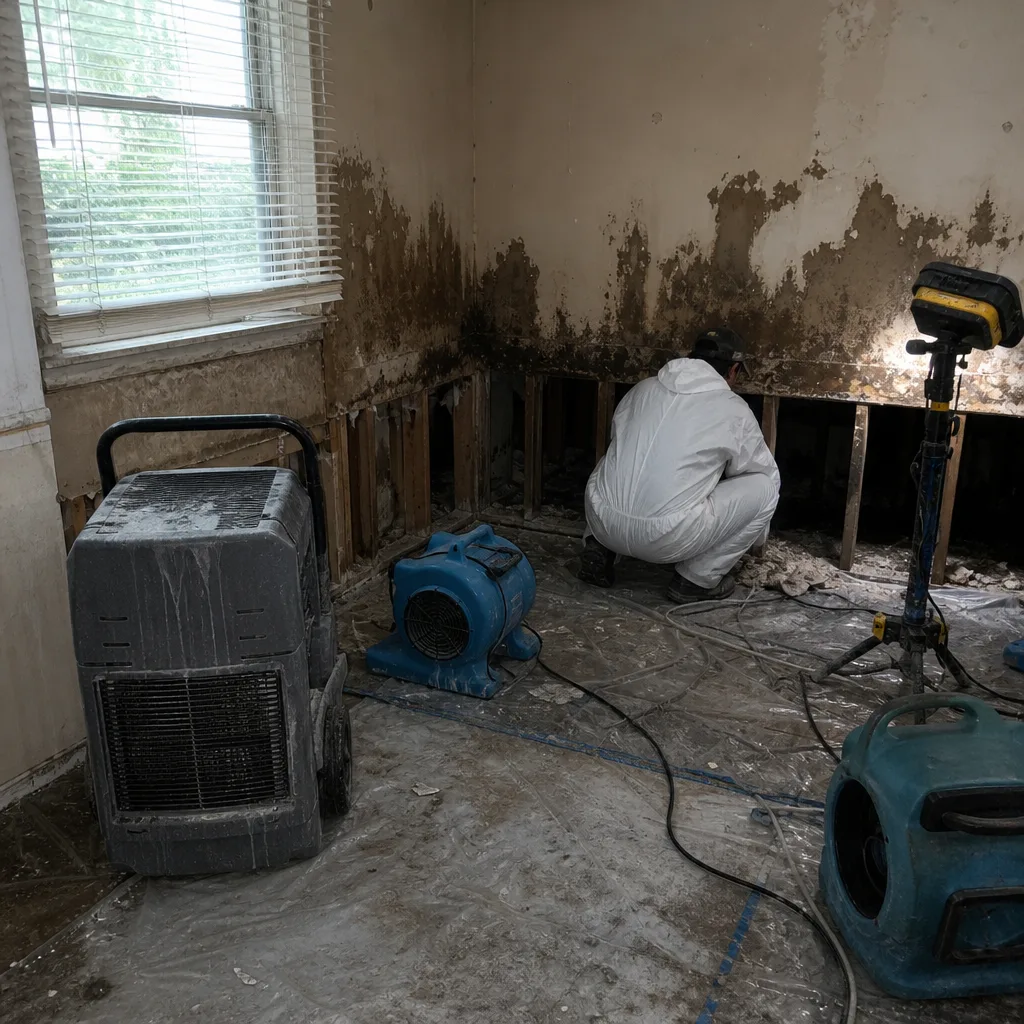 Before
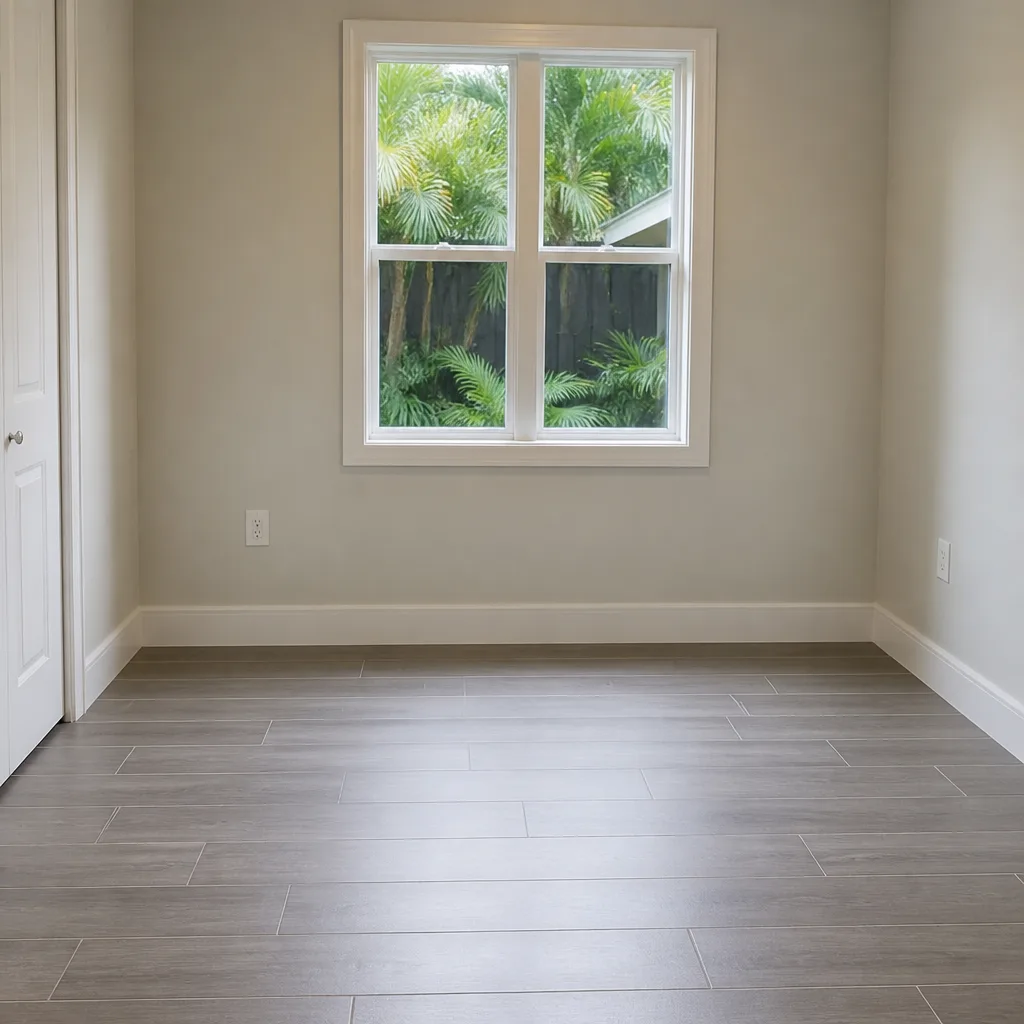 After
After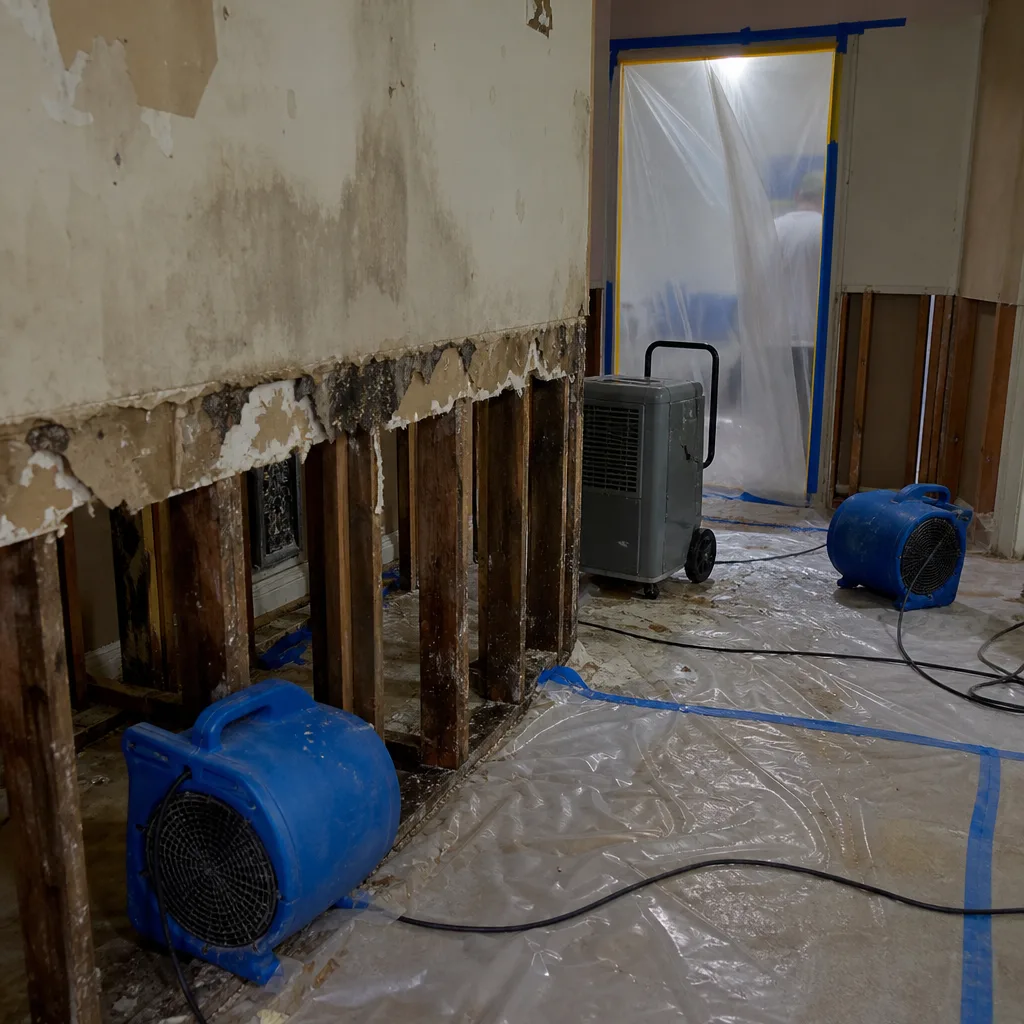 Before
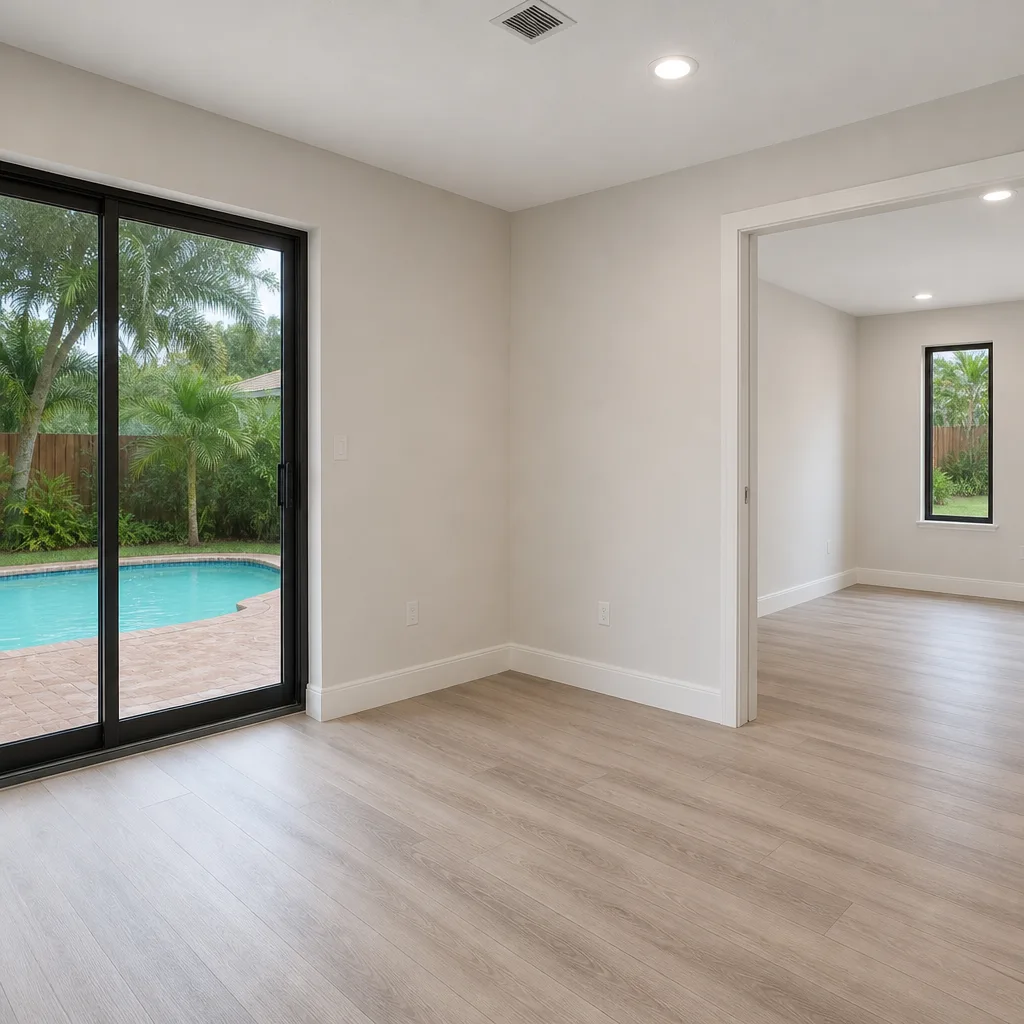 After
After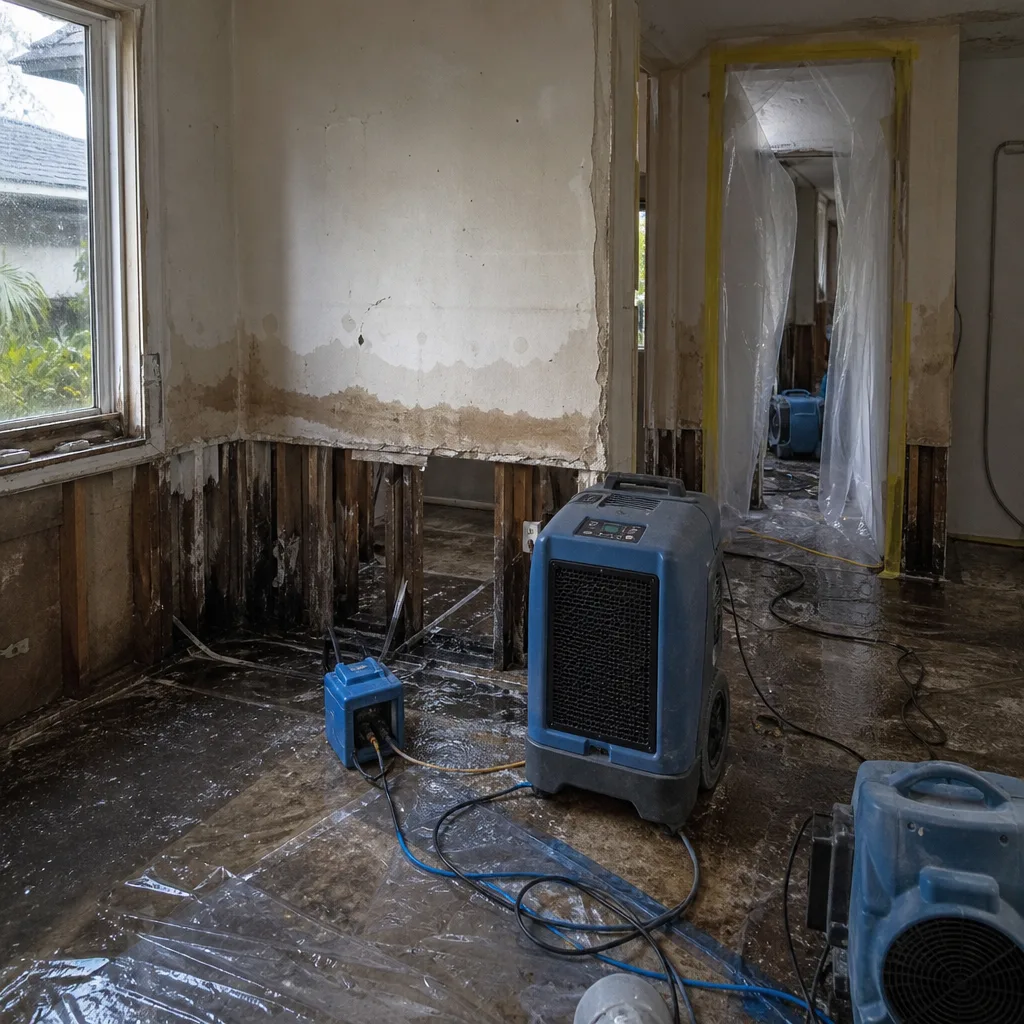 Before
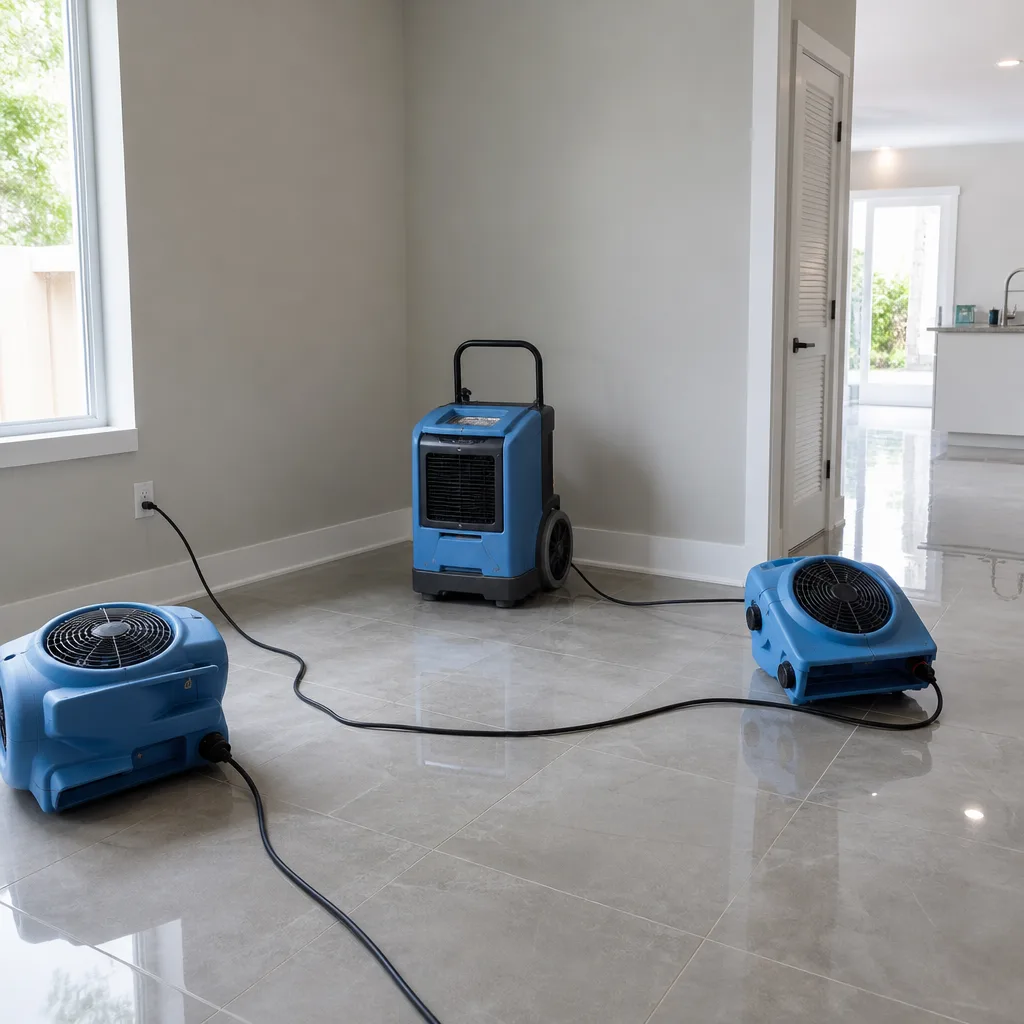 After
AfterWhen to Call a Professional
If your restoration project involves anything structural, electrical, plumbing, or roof-related, the permit conversation should happen before any work begins, as detailed in our How to Hire a Damage Restoration Contractor in Miami: A Step-by-Step Guide. If you find water damage in a load-bearing wall, damage around an electrical panel, or a roof leak in Miami’s hurricane zone, these are not weekend projects. They are projects where code compliance determines whether your home holds its value and whether your insurer will stand behind you.
A professional restoration company with local Miami experience will know which permits apply, which products are NOA-approved, and which inspections must be scheduled. They will also give you the documentation you need when the work is done. Water damage restoration in Miami requires a working knowledge of Miami-Dade’s specific code amendments, not just the Florida Building Code. A company that works all over the state and dabbles in Miami will miss things. A company that works in Miami every day will not.
Marsh Water Damage Miami offers free estimates in Miami, and we will tell you honestly whether your project needs a permit and what it will cost. Call (689) 888-7601 to talk through your situation.
Frequently Asked Questions
It depends on the scope. Emergency water extraction and drying, which are mitigation work, do not require a permit. However, if the restoration includes structural repairs, electrical or plumbing changes, or significant drywall replacement, a permit is required under Florida law and Miami-Dade County code. We always advise Miami homeowners to verify through the county portal rather than assume.
The property owner is legally responsible. Even if the contractor promised to handle permits and failed to do so, the county holds the homeowner accountable, and insurance and title companies follow the county’s lead. This is why verifying permits through the Miami-Dade portal before paying the final invoice is essential.
Technically, yes, but practically, it is extremely difficult. Title companies flag unpermitted work. Buyer’s inspectors flag it. Lenders may refuse financing. Many homes with unpermitted restoration work sit unsold until the work is retroactively permitted, which requires opening walls and paying after-the-fact fees. The sale price impact can exceed the original repair cost.
Florida Building Code Section 1203 requires vapor retarders, mold-resistant materials in wet areas, and proper ventilation in spaces being repaired. For mold remediation specifically, mold remediation in Miami must address the moisture source, not just the visible mold, and replacement materials must comply with the code’s moisture-control standards. Florida also has mold assessment and remediation licensing requirements under state law.
Apply for an after-the-fact permit through the Miami-Dade Building Department as soon as possible. The inspector will tell you what must be opened to verify the work. This is uncomfortable and may cost a few thousand dollars, but it is far cheaper than a failed sale or a denied insurance claim. The longer you wait, the worse it gets.
Yes, in two ways. First, roof and window repairs in Miami’s High-Velocity Hurricane Zone have stricter product and attachment standards than anywhere else in the country. Second, post-Hurricane Ian documentation requirements from insurers have made permit records and photo documentation far more important at policy renewal. Storm damage restoration in Miami should always include a complete permit and documentation package.
For straightforward repair permits, plan on one to three weeks for issuance and another week for inspections, assuming the work passes on the first visit. Structural repairs and roof work take longer. Emergency mitigation can begin immediately without a permit, but the reconstruction phase must wait for the permit. A contractor who starts reconstruction without a permit is breaking the law and putting your property at risk.
The Bottom Line
Florida’s permit requirements for restoration work are not bureaucratic formalities. They are the difference between a home that is sellable, insurable, and safe, and a home that can create a financial catastrophe years after the work is done. In Miami-Dade, the rules are stricter than most homeowners realize, and the consequence of getting them wrong is measured in failed sales, denied claims, and expensive retroactive permits. The solution is simple: understand which work triggers permits, verify permits through the county portal, insist on closing final inspections, and keep every piece of documentation. The permit costs under $500 in most cases. The mistake costs many times that. If you are facing restoration work in Miami, call Marsh Water Damage Miami at (689) 888-7601 for a free estimate and straight answers about what your project actually requires.
Written by Tobias Reyner, Owner at Marsh Water Damage Miami, serving Miami since 2005.