
 Water damage drying
 Fire & smoke cleanup
 Mold remediation
 Storm response
 Sewage cleanup
 Reconstruction
Free visual inspection and a written scope of work before any mitigation begins - photos, moisture readings, and drying logs go in your claim file
The scope we write is the scope we bill. Anything new gets shown to you, in writing, before we touch it.
Get your free estimateRestoration work we handle
See the difference
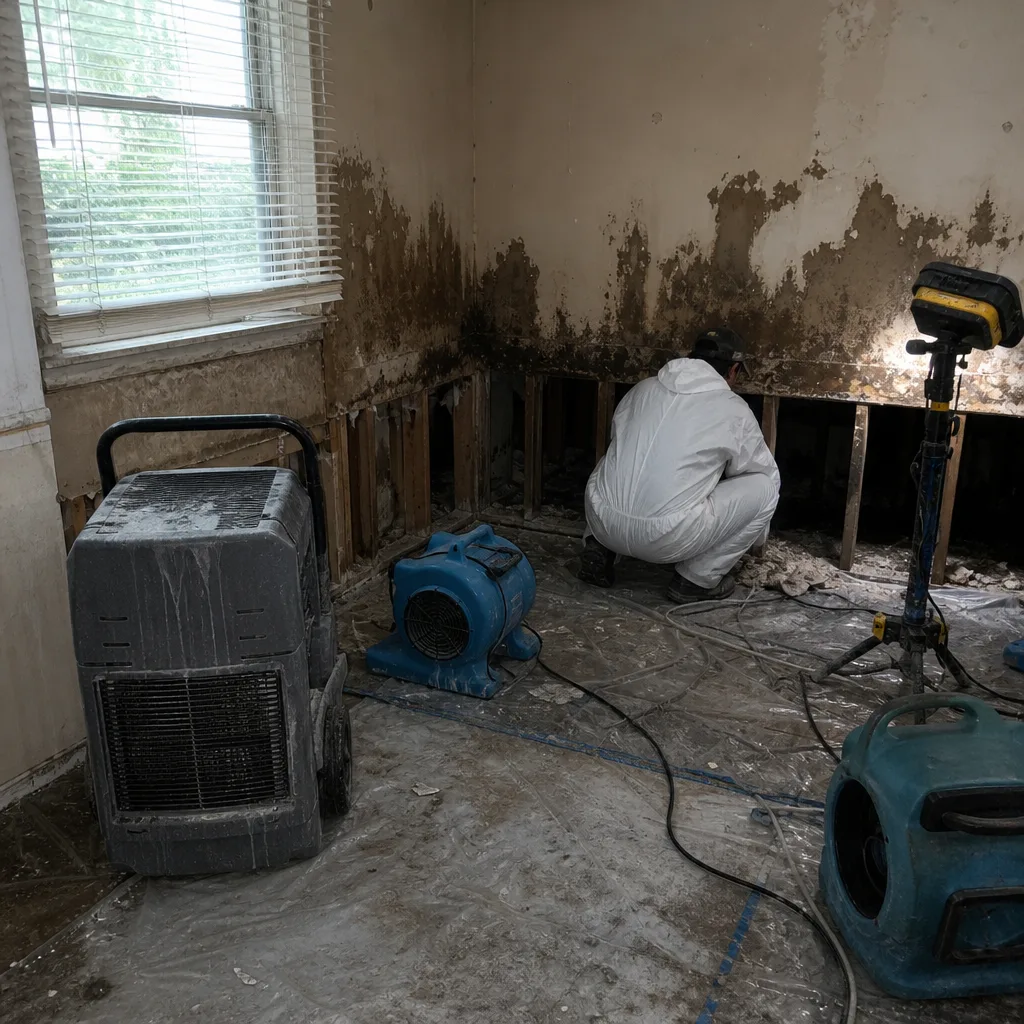 Before
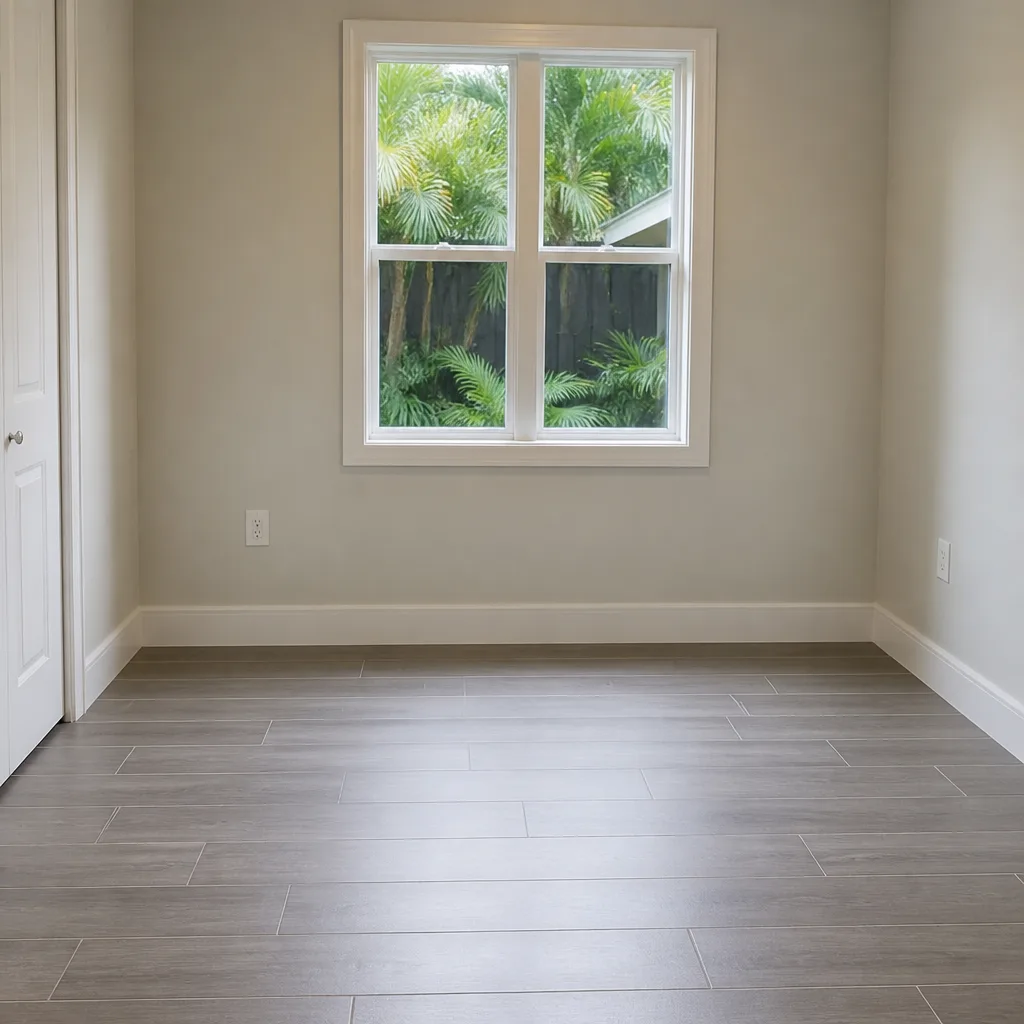 After
After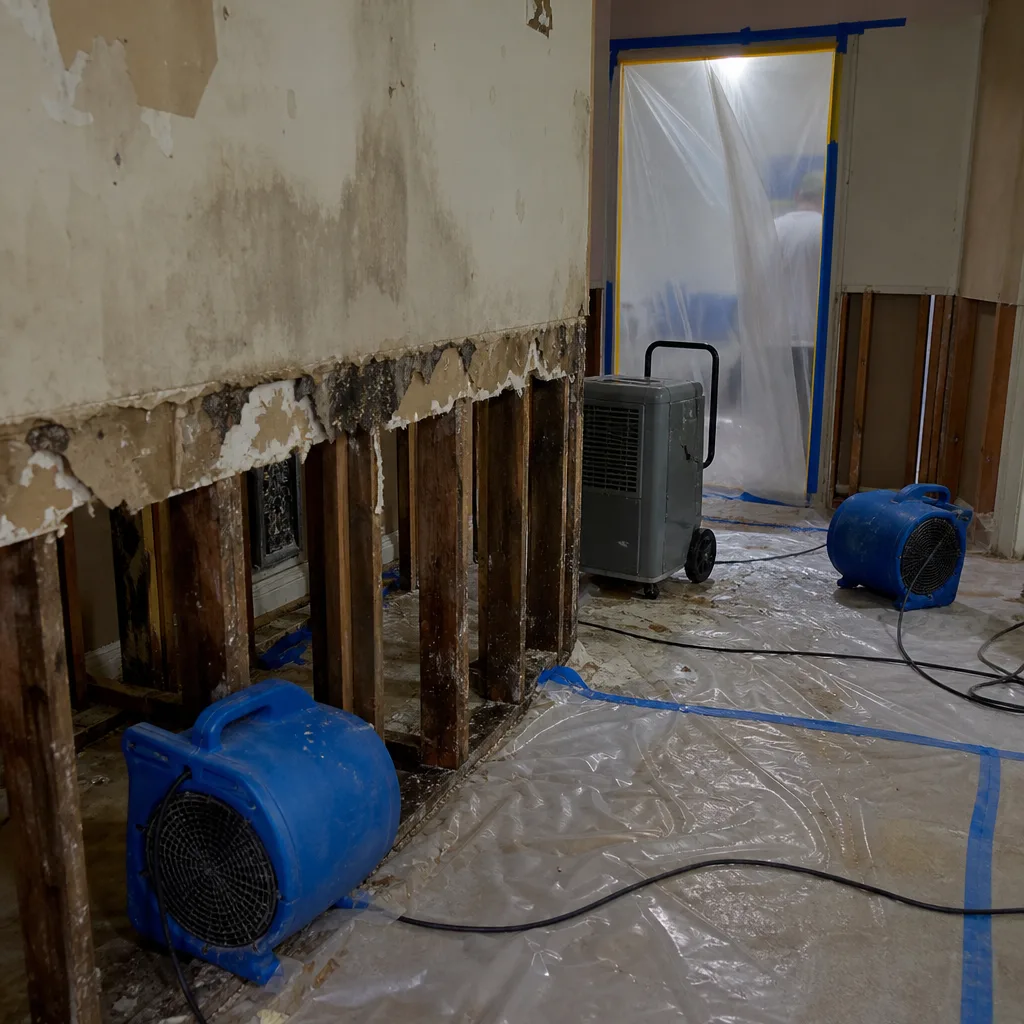 Before
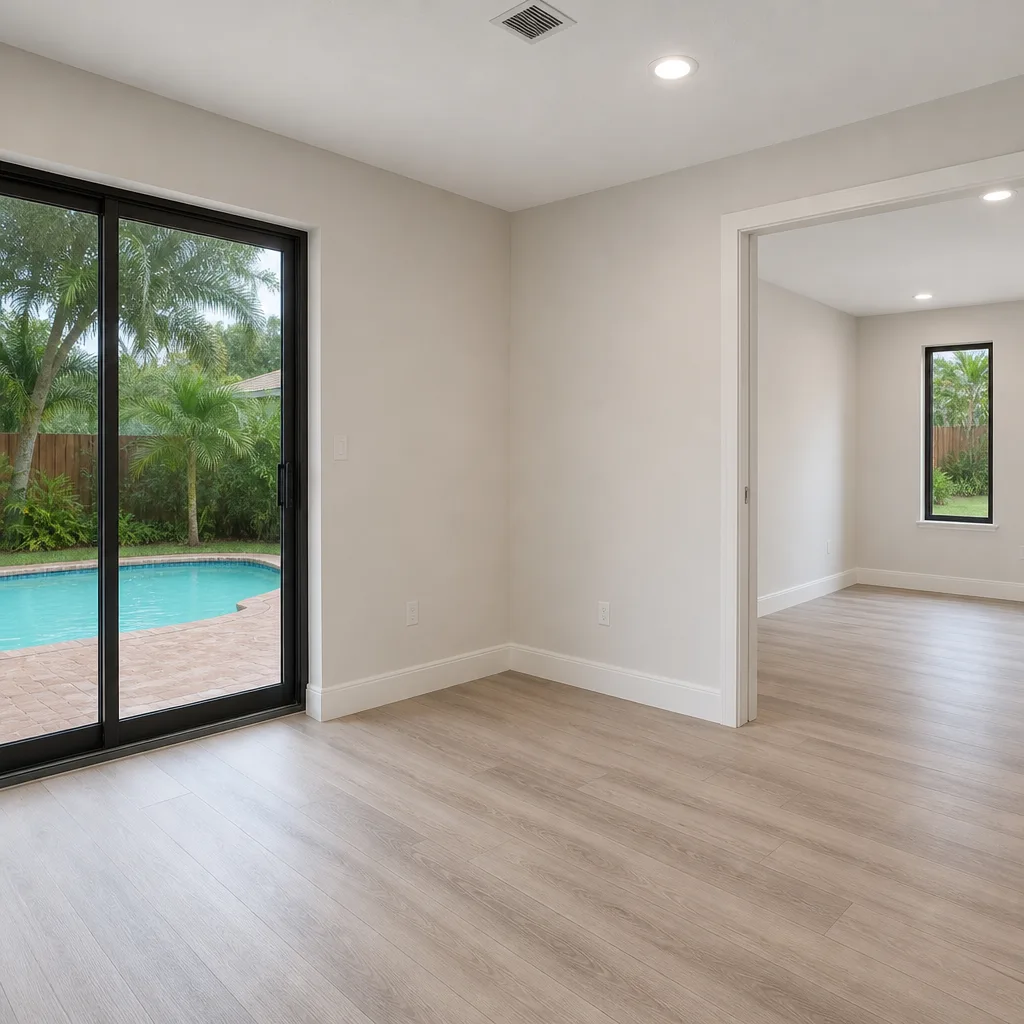 After
After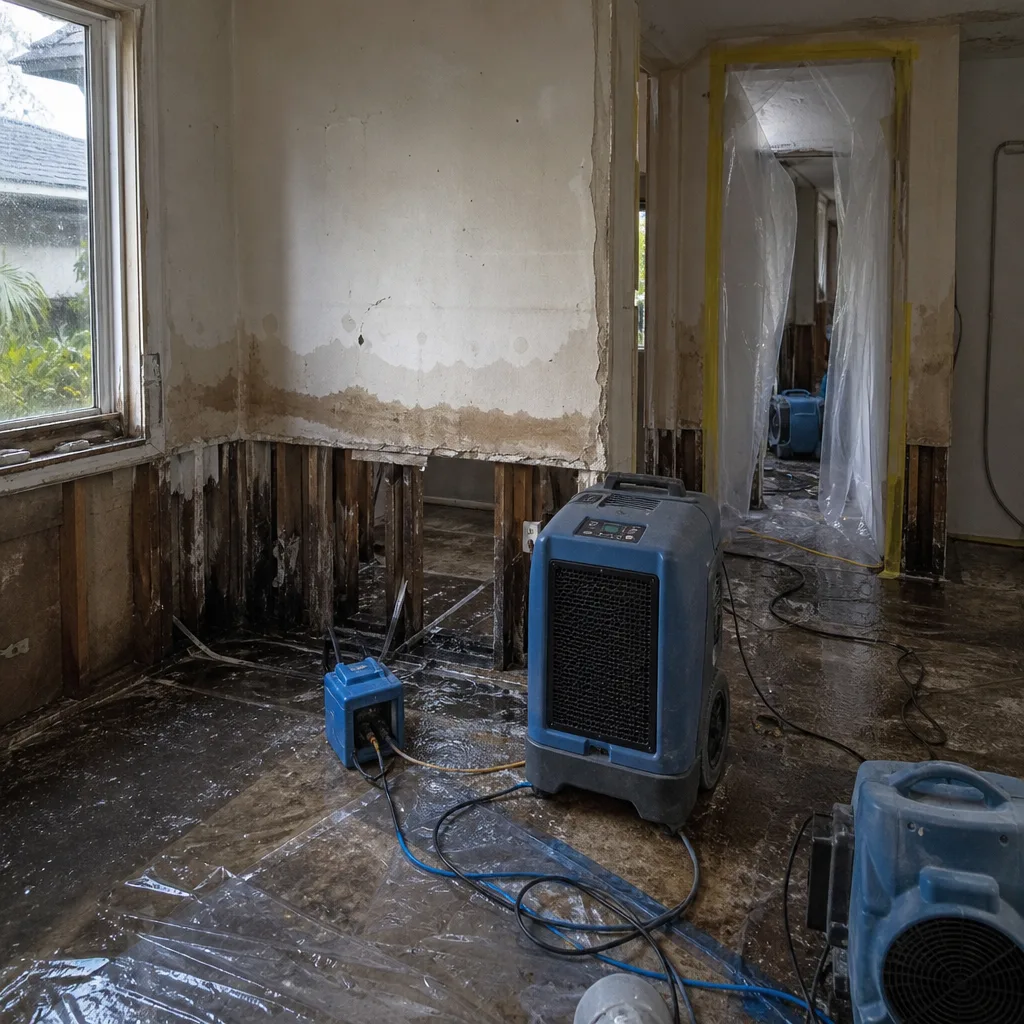 Before
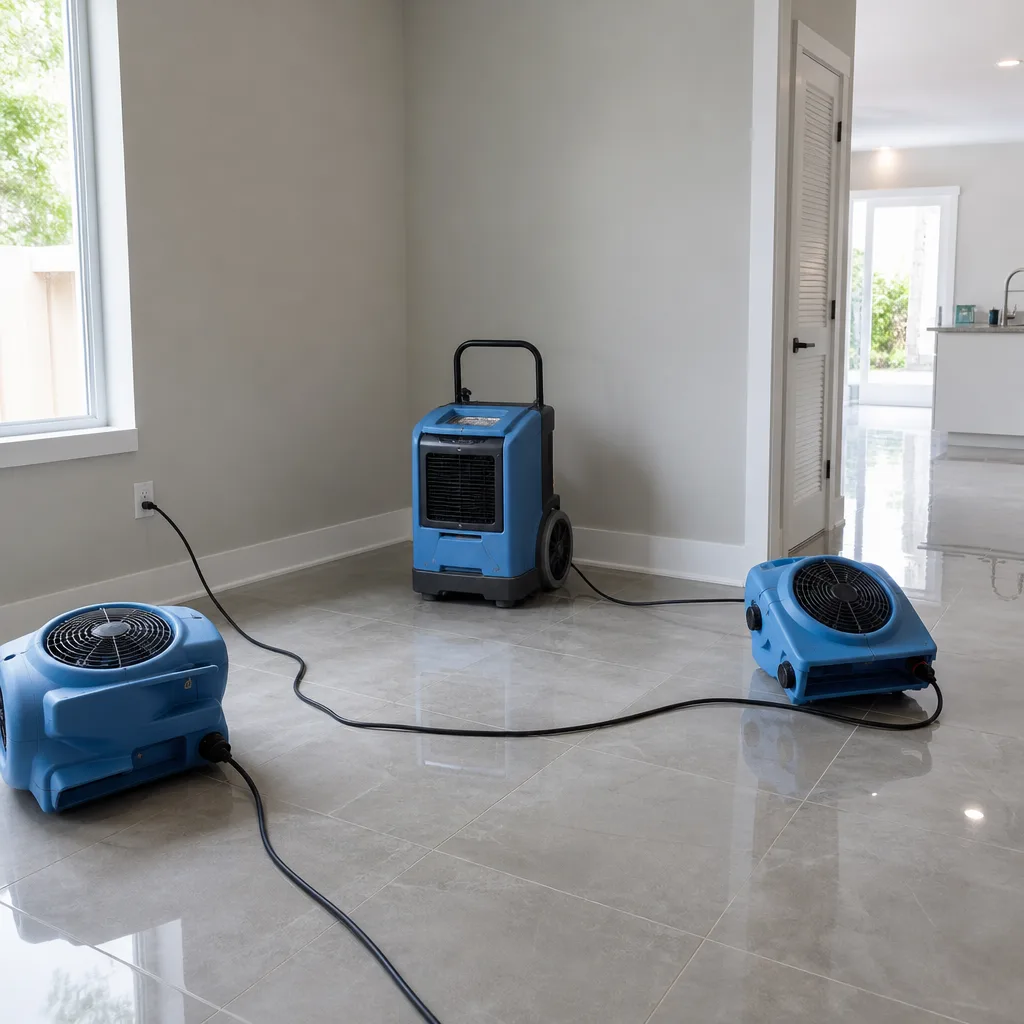 After
AfterHow Much Does Storm & Disaster Restoration Cost in Miami?
Storm and disaster restoration in Miami typically costs between $3,200 and $18,500 for most residential jobs, with water extraction and drying alone running $1,500 to $4,800 and full rebuilds after major hurricane damage reaching $30,000 or more. The exact price depends on how much water entered the home, how long it sat, and whether mold has taken hold. Most Miami homeowners we work with are filing insurance claims, which is why we produce written, line-item pricing before any demolition starts.
If you’re standing in water right now, call (689) 888-7601 and a live person will answer. That’s not a voicemail tree or a callback service. Someone picks up at 3 a.m. on Christmas because water doesn’t wait, and neither do we.
Key Takeaways
- Most common jobs: $3,200 to $8,700 for water extraction, drying, and basic storm damage repair
- Hurricane-related structural damage: $10,000 to $30,000+ depending on roof, window, and flooding damage
- Mold remediation after storms: $2,500 to $9,000 for typical residential coverage
- Response speed matters more than anything: water left for 48 hours in Miami’s humidity grows mold fast
- Insurance claims: most storm restoration is covered; we document everything for your adjuster
Storm & Disaster Restoration Cost Breakdown (2026)
Here’s what Miami homeowners can expect to pay in 2026, broken down by the actual work involved. The table reflects the local market, where humidity, hurricane exposure, and older housing stock in neighborhoods like Coral Gables, Shenandoah, and Allapattah all push prices compared to the national average.
| Service | Typical Cost Range (Miami, 2026) | What You’re Paying For |
|---|---|---|
| Emergency water extraction | $1,500 – $4,800 | Commercial pumps, truck-mounted extractors, standing water removal, initial sanitizing |
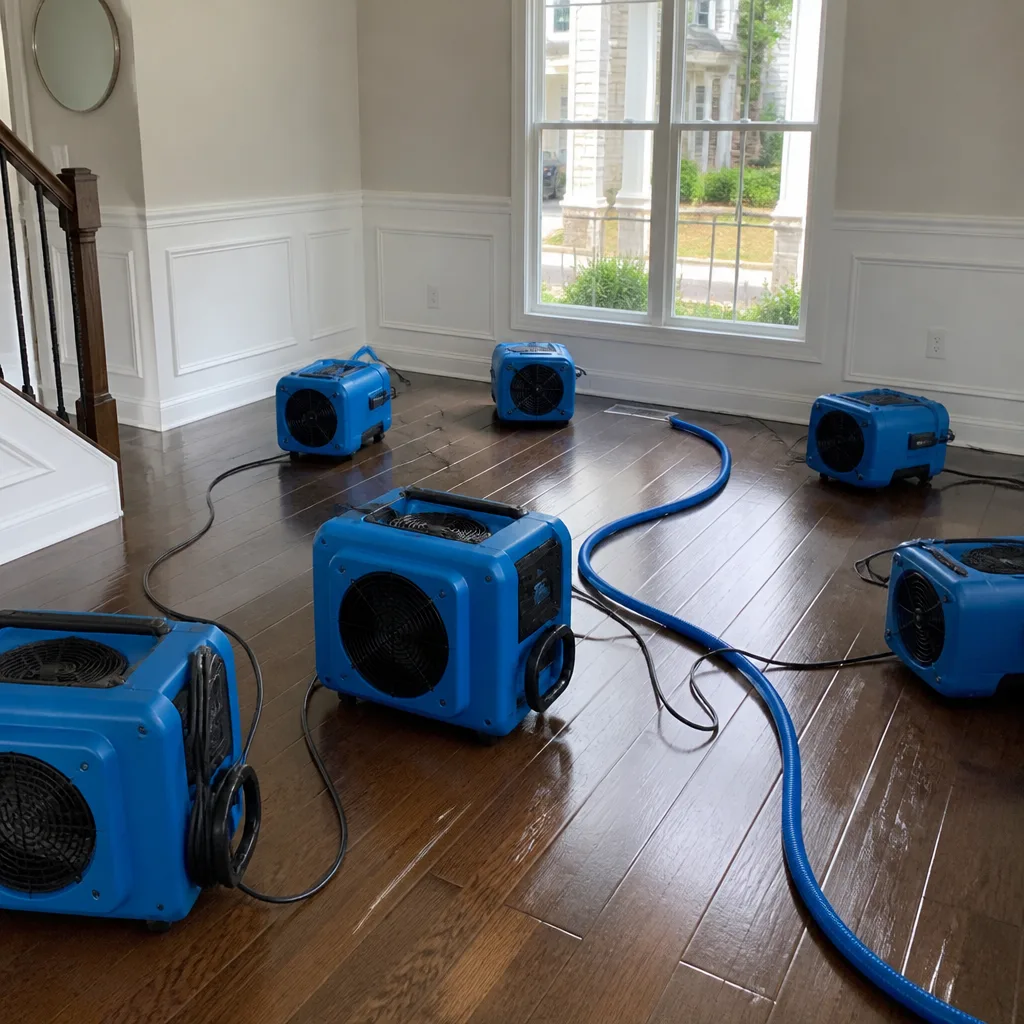
| Structural drying (3-5 days) | $1,100 – $3,200 | Dehumidifiers, air movers, psychrometric readings (measuring moisture in the air), daily monitoring |
| Dehumidification and moisture mapping | Included in drying above | Infrared cameras, moisture meters, mapping water migration through walls and subfloors |
| Storm debris removal and board-up | $800 – $2,400 | Securing openings, tarping, removing wet insulation and compromised drywall |
| Category 3 (contaminated) water cleanup | $4,000 – $9,500 | Flood surge cleanup, sewage-adjacent water, antimicrobial treatments, disposal of unsalvageable materials |
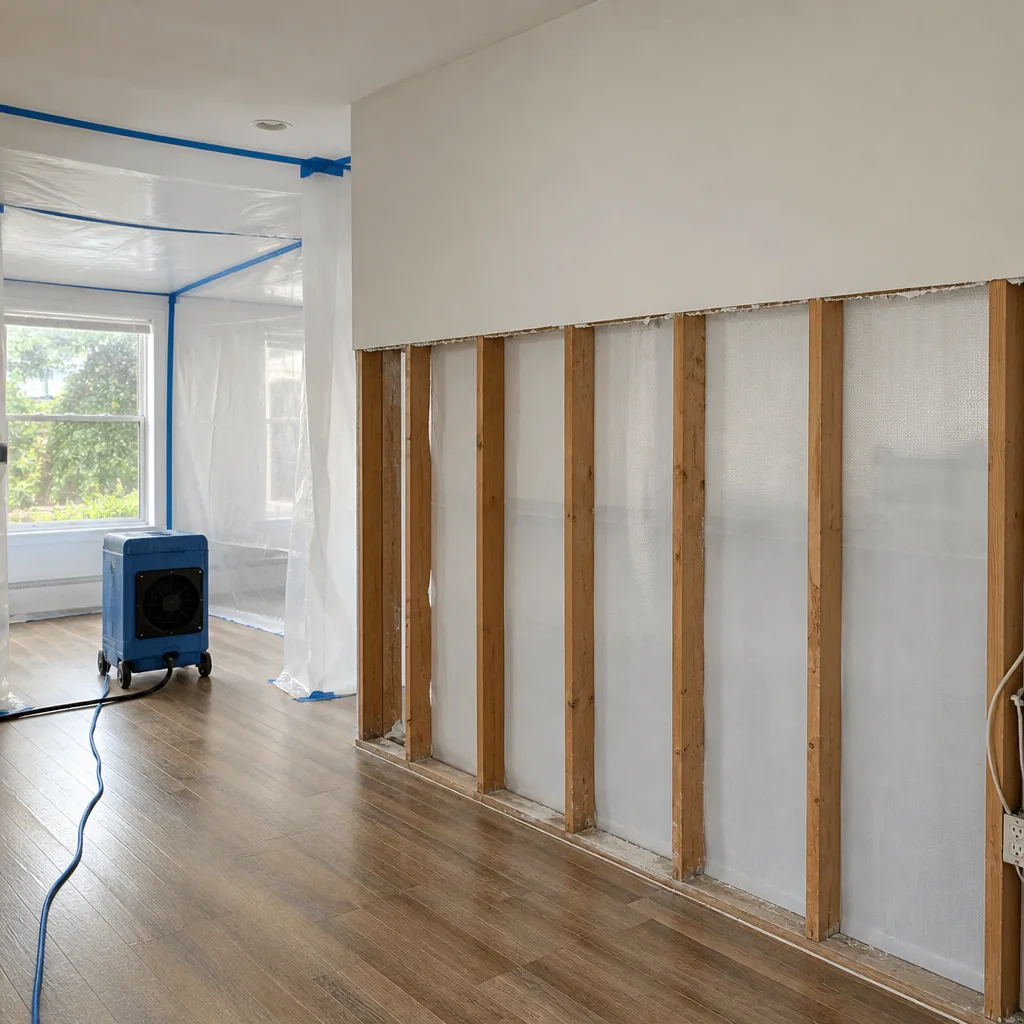
| Mold remediation | $2,500 – $9,000 | Containment, HEPA air filtration, removal of affected materials, final clearance testing |
| Full rebuild after major storm | $15,000 – $45,000+ | Drywall installation, flooring, cabinetry, painting, and finish work |
Most jobs fall somewhere between $3,200 and $8,700 because the majority of storm damage in Miami is a combination: water enters through a roof breach or window failure, soaks drywall and flooring, and requires both extraction and drying before repairs. The numbers in that table are built from real Miami-area claims and invoices we’ve handled since 2005, not national averages that don’t account for how fast mold colonizes in this climate.
What drives a bill higher than the table suggests? Three things usually. First, how long the water sat before anyone caught it. A slab leak that sat for a week in a Coconut Grove bungalow will cost multiples of a storm surge caught the same evening in Brickell. Second, the water category. Clean Category 1 water from a burst pipe behaves differently than Category 3 water from storm surge, which carries sewage, chemicals, and microorganisms that require full antimicrobial treatment and a strict containment protocol. Third, what’s behind your walls. Miami homes built during the 1920s-1960s boom in neighborhoods like Shenandoah and Morningside often have plaster-and-lathe construction that handles water differently than the gypsum board in a 2005 Kendall townhome.
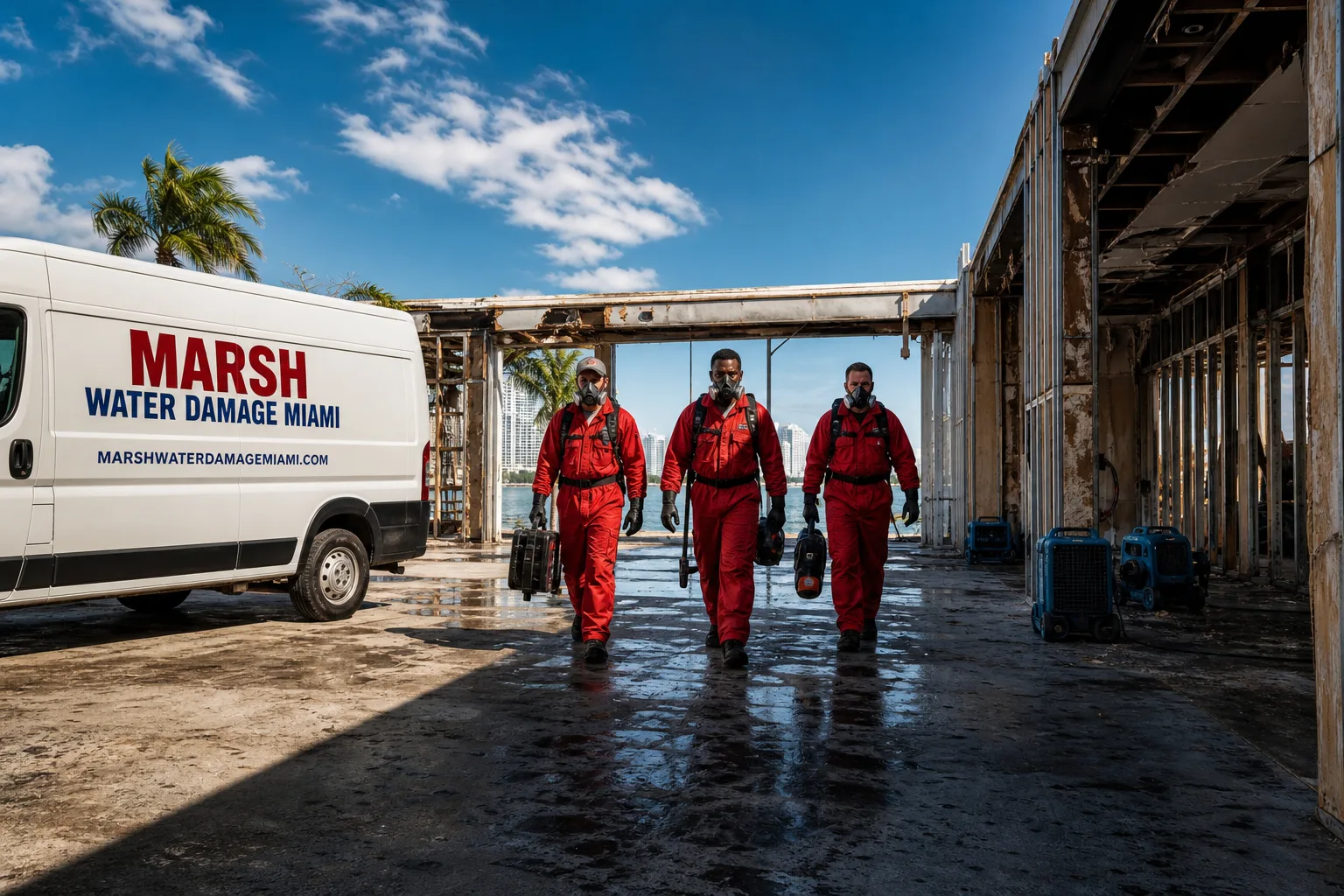
Our crews run Dri-Eaz, Phoenix, XPOWER, B-Air, and Injectidry equipment. That’s the same commercial-grade gear used on large-loss jobs like condo towers and hospital wings. We don’t swap in residential-grade equipment just because it’s a house. A Miami summer attic needs the same drying power as a 5,000-square-foot conference room, and we deploy it accordingly.
What Affects Storm & Disaster Restoration Pricing in Miami
Miami has its own rules for restoration costs. Here are the six factors that actually move the price, not the generic ones you’ll read on national sites.
- Water category (1, 2, or 3): Category 1 is clean water from pipes or rain. Category 2 has some contamination. Category 3 is storm surge, river flooding, or sewage-related, and requires full containment, antimicrobial treatment, and more disposal. Category 3 work adds 40% to 80% to the bill.
- How long the water stood: 24 hours is manageable. 48 hours in Miami’s 80% humidity means mold spores have germinated in drywall and carpet pad. 72+ hours usually means material removal rather than drying, and removal costs more in time and replacement materials.
- Construction era of your home: Pre-1970 homes in Coral Gables, Shenandoah, and the Upper East Side often have plaster walls, hardwood floors, and dimensional lumber that dry differently than modern materials. Some plaster holds up; some crumbles. We won’t know until we cut a small inspection hole, which is why we do that before pricing.
- Extent of structural compromise: Weak spots in roofs, soffits, and window flashing are common in Miami, where salt air and tropical storms exploit every small opening. The more water entry points, the more demolition and rebuild area we price.
- Mold presence and spread: If microbial growth has reached wall cavities or HVAC ductwork, the containment and remediation scope jumps. We use the term microbial remediation because it covers more than the black mold you’re picturing: mildew, fungus, and bacterial growth all qualify, and each requires different treatment and clearance protocols.
- Access and logistics: High-rise condos in Brickell or Edgewater add elevator scheduling, building manager coordination, and equipment transport time. Single-family homes in Coral Way or Little Havana with clear driveways cost less to reach. If our equipment needs to be lifted or hand-carried, that reflects in the line item.
One more local reality: Miami building permits. Any structural repair beyond basic drying typically requires a permit from the city or your municipality (Coral Gables, Hialeah, and Miami Beach all have their own building departments). Permit fees run $200 to $1,500 depending on scope, and we handle the application, drawings, and inspections as part of the job. That’s not an optional add-on. We pull the permit, we close the permit.
How to Save on Storm & Disaster Restoration
Saving money on restoration is mostly about acting before the damage compounds. Water in a Miami home does not self-correct. It spreads, wicks up drywall, gets under tile, and feeds microbial growth by the hour. Here’s what actually reduces your final invoice.
- Call the moment you see water. The difference between a $3,000 extraction job and a $9,000 mold remediation is often one phone call made within six hours instead of after a weekend. Call (689) 888-7601 and a person answers, any hour.
- Document everything for insurance. Photos of standing water, wet floors, and damaged contents help your adjuster process faster. Our crew photographs and moisture-maps the entire scene before any demolition, so you get a time-stamped record that supports your claim.
- Don’t demo anything yourself before we arrive. It’s tempting to tear out wet drywall. It can also damage what’s behind it, disturb asbestos in older homes, or compromise your insurance documentation. Let us do the controlled demolition.
- Get a written price before work starts. You should never be surprised by a restoration bill. We hand you a line-item scope and price, signed, before any tool comes off the truck. If the scope changes, the price changes on paper first, not after the fact.
- Ask about the 365-Day Done Right Promise. If a repair we make doesn’t hold within a full year, we come back and fix it. The second visit is free, automatically. No argument required, no claims process. It’s printed on every work order. That means you’re not paying a second deductible out-of-pocket because a seam failed or a patch swelled.
Free estimates are part of how we work. Call (689) 888-7601 and we’ll walk you through what we’d scope, investigate, and price before you ever commit to anything.
The Threshold Verified Standard and Why It Matters Here
We started Marsh Water Damage Restoration in 2005 as part of the Threshold Group family because we kept seeing the same two fears in every water event. The water itself is bad enough. But homeowners in Miami, especially people who are home alone, parents with young kids, or older residents, also have to answer the door to a crew they’ve never met. That’s a real thing, and we treat it as part of the restoration, not an afterthought.
Every technician who walks onto a Marsh job has passed the Threshold Verified standard. That means five steps, applied to every visit, every time:
- Background check: every tech is screened and cleared before they’re assigned to a route
- Identity verification: you receive the name and photo of the person coming before they arrive
- Photo ID badge at the door: nobody enters your home without showing credentials first, even if you recognize them from the photo
- Uniformed, marked arrival: you know the truck and the uniform belong to Marsh, not a subcontracted crew you’ve never heard of
- IICRC, RIA, and IFA credentials: the technical team holds the restoration industry’s recognized certifications, not a weekend seminar certificate
Marsh was the name chosen deliberately. A marsh is low, wet ground. Water where it shouldn’t be. That’s what we walk into every day in Miami, from the flood-prone streets of Allapattah to the bayfront condos of Edgewater. The name says what the company handles, and the Threshold Standard says who shows up to handle it.
DIY vs Professional – What You Can and Cannot Do
You can sweep water toward a floor drain. You can move small furniture off wet carpet. You can take photos for your insurance file. Stop there.
After that, the risks compound quickly. Wet drywall deforms under its own weight. Water-saturated ceilings collapse without warning. Standing water near outlets or extension cords creates electrocution risk. And in Miami’s climate, what you don’t see in the wall cavity is almost always worse than what you can see on the surface.
We don’t say this to scare you. We say it because we’ve seen homeowners injure themselves removing water-damaged materials that were structurally unsound, and because improper drying leads to the kind of hidden mold that becomes a $15,000 remediation two years later. Proper storm restoration uses commercial dehumidifiers placed on a calculated layout, air movers at engineered angles, and psychrometric readings (measuring the moisture in the air) to determine when the structure is genuinely dry, not just dry on the surface. That’s not something a rental fan from the hardware store achieves.
The safe division of labor: you handle the phone call and the documentation, we handle the extraction, drying, demolition, and rebuild. Call (689) 888-7601 and a live person walks you through the next two hours.
Insurance, Claims, and Written Pricing
Most storm restoration in Miami runs through homeowner’s insurance. Hurricane deductibles, flood policies (usually via FEMA’s NFIP, not your standard HO-3), and windstorm coverage all interact differently depending on your policy. We work directly with adjusters, provide documented damage scopes with photos and moisture readings, and walk you through what your policy language actually covers.
What we don’t do is quote one number verbally, then submit a different number after demo begins. Every Marsh job gets a written price before any work starts. That’s a core operating rule, not a promotional offer. If the demo reveals additional scope, we stop, document, and give you an updated written scope before proceeding. The final invoice matches the final signed scope. It’s how we’ve operated since 2005, and it’s why adjusters and homeowners both trust the documentation we produce.
If you’re pursuing a claim, document the following before calling: photos of the damage, your policy number, and a rough sketch of where water entered. Then call us. We’ll add the professional documentation layer your adjuster needs.
FAQs – Storm & Disaster Restoration Cost
How much does storm damage restoration cost in Miami?
Storm damage restoration in Miami typically runs $3,200 to $18,500 for most homes, with smaller jobs like single-room water extraction starting around $1,500 and full storm rebuilds reaching $45,000 or more depending on structural scope. Call (689) 888-7601 for a free, written estimate based on your specific damage.
Is storm restoration covered by insurance?
Most storm and hurricane damage is covered under homeowner’s policies, but flood damage from storm surge usually requires a separate NFIP flood policy, and your hurricane deductible (often 2% to 5% of your home’s insured value) applies separately. We document everything in a format adjusters accept, and we’ll help you understand your policy language before any work is authorized.
How much does water extraction alone cost in Miami?
Emergency water extraction for a typical Miami home costs $1,500 to $4,800, depending on square footage, water depth, and access. That covers standing water removal, initial sanitization, and setup of the drying system. Additional drying time, if needed, is priced separately on your written scope.
When can someone come out for storm damage?
Same day in nearly every case. We have crews stationed throughout Miami-Dade County, from Homestead to Aventura, and we answer calls 24 hours a day, 7 days a week, including holidays. Call (689) 888-7601 and a live person will confirm arrival timing while you’re still on the phone.
Does the 365-Day Done Right Promise cover storm restoration work?
Yes. Every repair we make, including storm damage restoration, is covered by our 365-Day Done Right Promise. If it isn’t right within a full year, we come back and fix it at no charge. It’s printed on every work order in writing, and the free second visit is automatic. You don’t have to argue for it.
Is it cheaper to repair storm damage myself?
Rarely. The visible water is a small fraction of what’s actually wet inside wall cavities and subfloors. Improper drying in Miami’s humidity almost guarantees mold growth within weeks, turning a $3,000 extraction into a $9,000 remediation. The most common expensive mistake we see is a homeowner who dried the visible surface, repainted, and discovered structural mold a year later.
Storm & Disaster Restoration Costs by Miami Neighborhood
Miami is not one real estate market, and it’s not one restoration market either. Here’s what we see in the neighborhoods we work most often.
Coral Gables
Tree-dense canopy and older bungalow stock mean roof breaches and window failures are the top storm damage sources. Plaster walls in the pre-1960 homes often need custom patching rather than standard drywall replacement, adding 15% to 25% to finish costs. Restoration here typically runs $4,000 to $18,000 depending on water volume.
Brickell and Downtown
High-rise storm damage usually enters through failed windows, balcony doors, or roof drains. Job costs reflect elevator scheduling, building management protocols, and expensive finish materials. Budget $5,000 to $25,000 for typical condo storm damage, with the building’s master policy often covering common areas while you cover the unit interior. We navigate both.
Shenandoah and Little Havana
Ground-level homes on flat lots with Spanish-tile roofs. Water tends to pool against foundations during heavy rain, meaning subfloor damage and wicking up plaster walls. Crawlspace drying adds $1,200 to $2,800 to a typical bill. Most jobs here land between $3,500 and $12,000.
Coconut Grove and South Miami
Slab-on-grade construction with varied elevation. Lower-lying grove homes near the bay see storm surge and Category 3 water more frequently, requiring full antimicrobial treatment and containment. Restoration jobs here run $5,000 to $22,000 for water events and $10,000 to $35,000 when structural rebuild is needed.
Allapattah and Liberty City
Flat-roof commercial and residential construction with older electrical systems. Storm water through roof scuppers and around old window frames is the common pattern. Pricing here is often moderate, $3,000 to $10,000, but electrical safety is a prime concern, and we coordinate with licensed electricians before and during any wet-area work.
To see the full scope of what our storm and disaster crews handle across Miami-Dade, visit our Storm & Disaster Restoration in Miami page. It covers our process for water extraction, structural drying, debris removal, and rebuild work in more detail.
Our Restoration Process
You should know exactly what happens when you call us for storm damage, step by step. Here’s the sequence, in order, with times based on Miami job sites we handle weekly.
- Call answered immediately (minute 0): A live person answers at (689) 888-7601, takes your name, address, and the nature of the water, and confirms if you’re safe. If there’s electrical hazard or structural risk, we tell you to leave specific areas while you wait.
- Technician dispatched with name and photo (minutes 5-15): Your assigned tech’s name and photo arrive by text before they leave. This is the Threshold Verified standard in action. You know who’s coming before the knock.
- On-site assessment and moisture mapping (arrival to hour 2): The tech arrives in a marked Marsh vehicle, shows photo ID at the door, and walks the damage with you. Using infrared cameras and moisture meters, we map where water has traveled, even where you can’t see it. We write a detailed scope and price on the spot.
- Written scope and price (hour 2): You receive a line-item, signed price before any tool leaves the truck. No surprises, no ballooning numbers. You approve. We start.
- Extraction and controlled demolition (hours 2-8): Standing water is removed with truck-mounted extractors and commercial pumps. Unsupportable wet materials like drywall and carpet pad are removed under controlled conditions. We contain the area to prevent cross-contamination to dry rooms.
- Structural drying (days 2-5): Dehumidifiers and air movers from Dri-Eaz, Phoenix, XPOWER, B-Air, and Injectidry are placed on a calculated layout. We return daily to take psychrometric readings, adjust equipment placement, and document progress for your insurance file.
- Rebuild and finish (days 5-14+): Once drying is verified, we install replacement drywall, flooring, trim, and paint. The final walkthrough with you happens only after we’ve verified the repair with the same professional standards we’d apply to a commercial job.
- 365-Day Done Right Promise begins (day 365): Your work order is stamped with the promise. If anything we repaired fails within the year, the second visit is free. We make it right.
That’s the process. It’s what we’ve done since 2005, and it’s what every Marsh crew in Miami follows on every job, whether it’s a flooded studio in Allapattah or a storm-damaged estate in Coral Gables.
Your Next Step
If storm water is inside your Miami home right now, call (689) 888-7601. A live person answers, confirms you’re safe, and dispatches a Threshold Verified technician whose name and photo you’ll receive before they arrive. You’ll get a written price before any work begins, a written guarantee on every repair, and the 365-Day Done Right Promise printed on the work order.
Explore our home page to see the full scope of Marsh Water Damage Restoration services across Miami. For storm and disaster-specific work, our storm restoration service page has the process in depth. But when water is active, the page can wait. The call cannot.
Pricing reflects the Miami market as of 2026. Marsh Water Damage Miami offers free estimates – call (689) 888-7601.
Written by Tobias Reyner, Owner at Marsh Water Damage Miami, serving Miami since 2005.
What Our Customers Say
"Mold test came back clean after their drying. Peace of mind for us."
- Lydia F."Basement seepage after a storm. They pumped it out, treated for mold spores, and installed a dehumidifier for the week. Smell is gone."
- Walter D."Pipe broke under the sink and soaked the cabinet and floor. They extracted the water, removed the wet flooring, and documented everything for the insurance."
- Judith L.