
 Water damage drying
 Fire & smoke cleanup
 Mold remediation
 Storm response
 Sewage cleanup
 Reconstruction
Free visual inspection and a written scope of work before any mitigation begins - photos, moisture readings, and drying logs go in your claim file
The scope we write is the scope we bill. Anything new gets shown to you, in writing, before we touch it.
Get your free estimateFast, Reliable Water Damage Restoration Across Westchester
Westchester homes get wet fast. Flat roofs, concrete block, and a subtropical climate mean water finds its way in quicker than most homeowners expect. If you’re standing in a flooded den off Bird Road or watching a ceiling stain spread along Coral Way, you need someone who knows exactly what a 1960s concrete-block house does when it takes on water. That’s us. We respond to Westchester calls within hours, not days, because the difference between a $900 extraction and a $14,000 mold remediation is often just the first 24 hours. Call (689) 888-7601 and a live person answers, day or night.
Why Marsh Water Damage Miami Is Westchester’s Preferred Water Damage Restoration Company
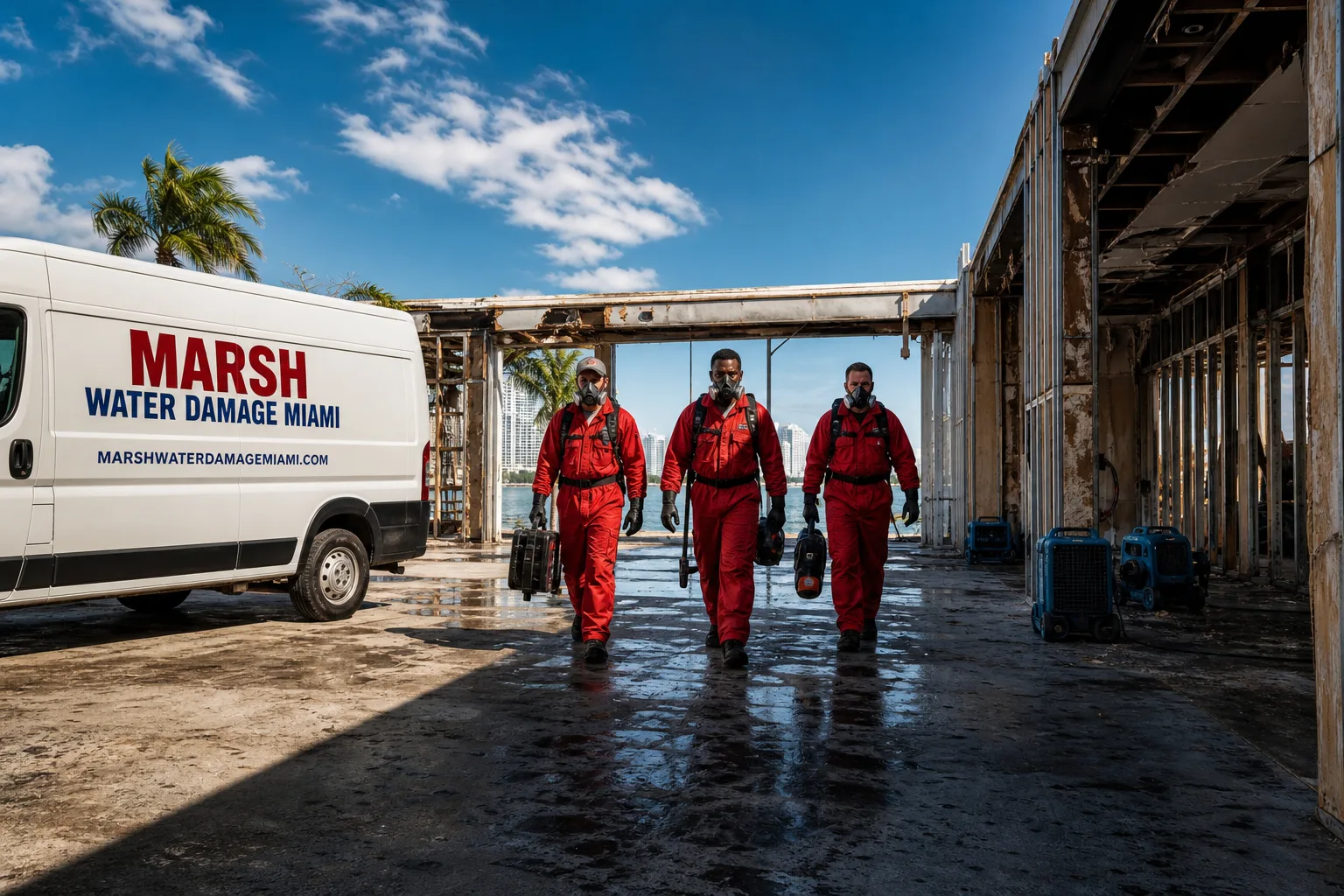
We’ve spent nearly two decades working inside Westchester’s specific housing stock, and that matters more than people realize. A 1958 single-story concrete-block home on a slab in Westchester does not dry like a raised-frame house in Coral Gables. The walls wick moisture differently. The flat roof holds water where a pitched roof sheds it. Our Water Damage Restoration team thinks in terms of masonry moisture content, not just surface dryness. Tobias Reyner, who leads our restoration operations, has walked hundreds of these jobs and knows what hides behind Westchester stucco. When we send a technician to your door, you get their name and photo before they arrive, and they show a photo ID badge when you open it. That’s the Threshold Verified standard, and we do it on every visit, not just the first one.
Response time to Westchester runs tight. Our dispatch is coordinated from the brand’s Miami office, but crews are stationed to serve Westchester locally, and we typically arrive within 60 to 90 minutes for emergency calls in the Bird Road, Coral Way, and Flagami corridors. Westchester homeowners tell us the same thing repeatedly: they called someone else first and got a voicemail. We answer the phone at 3 a.m. with a real person who can dispatch a real crew.
Restoration work we handle
Flooded Basement in Westchester
Most Westchester homes don’t have traditional basements, so “flooded basement” here usually means a flooded garage utility room, a sunken den, or a slab-level room that collects water during heavy rain. When the storm drains along Bird Road back up or the flat roof dumps water against a stucco wall, water finds the lowest point of the house and pools there. Emergency water extraction for a flooded lower-level room in Westchester runs $900 to $2,800 depending on square footage, water depth, and whether sewage or runoff is involved. We pull the standing water first, then map the moisture in the slab and walls before any drying equipment goes down.
When a Westchester Homeowner Needs It
You need extraction within hours when water has been standing on a concrete slab for more than a couple of hours. Concrete is porous. It soaks water upward and outward, and once moisture climbs into the drywall and the baseplate, the job shifts from extraction to full structural drying. If stormwater from outside has entered the home through a crack or overflow, it’s category 3 water, which carries bacteria and requires containment and antimicrobial treatment. Call us the moment you see it.
What the Job Involves Here
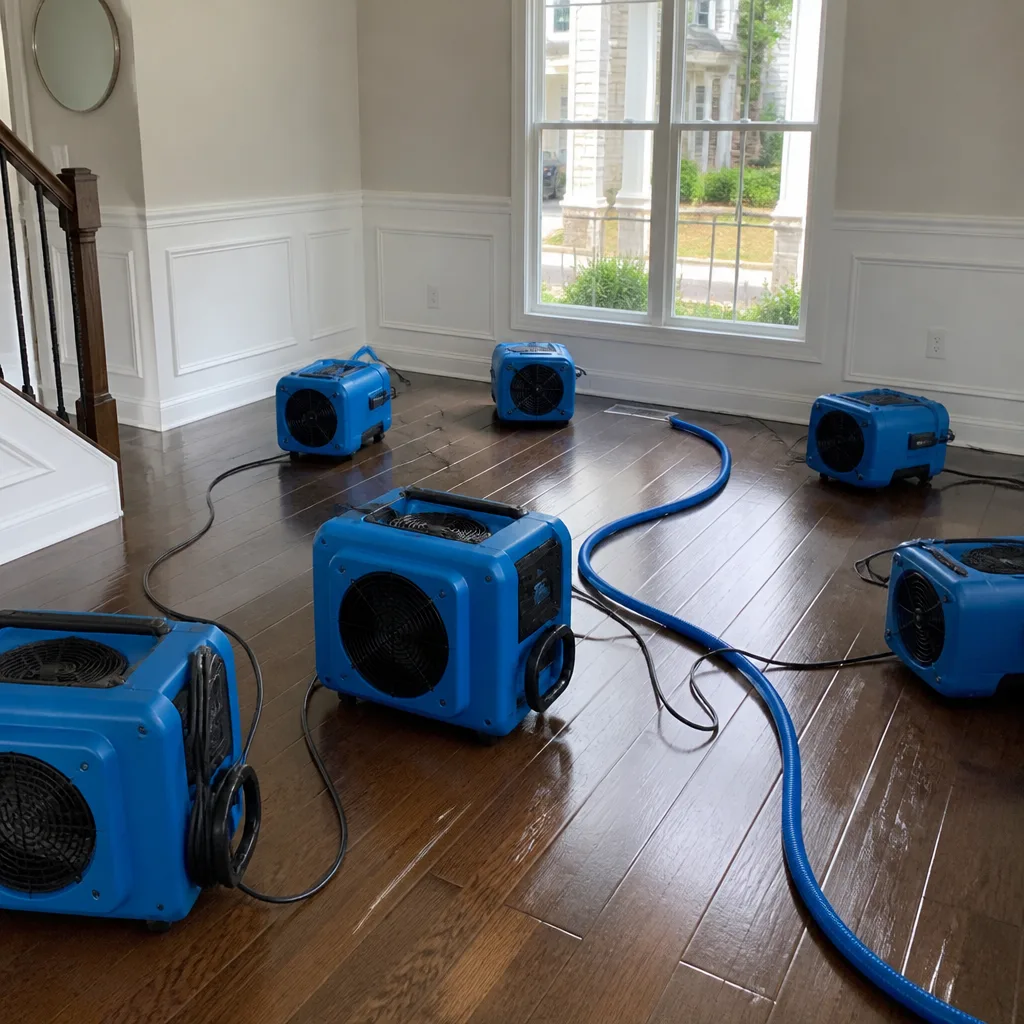
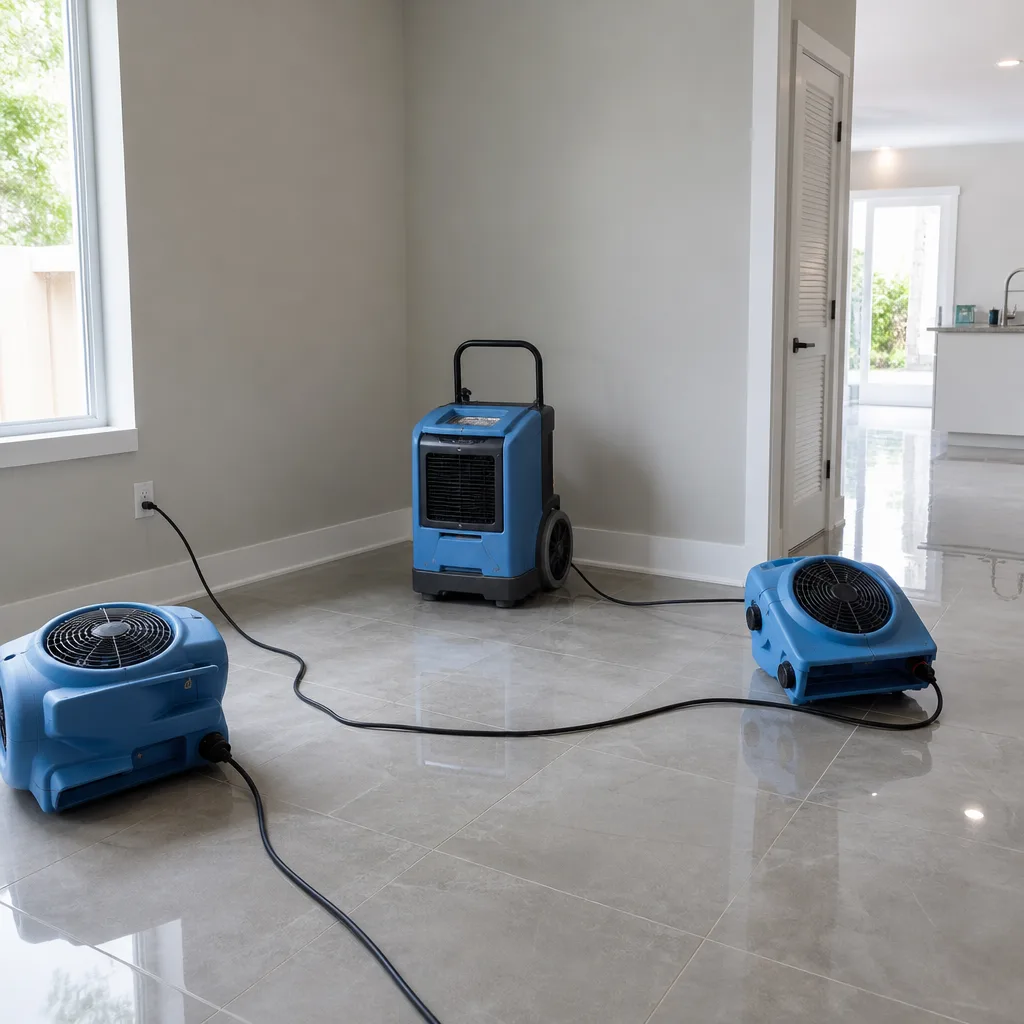
On a flooded lower room in a Westchester home, we’re checking for water that traveled under the baseboards and into the wall cavities. Thermal imaging usually shows moisture extending several feet beyond the visible puddle. We remove baseboards where readings are elevated, drill small drain holes in the drywall to release trapped water, and run B-Air air movers and dehumidifiers calibrated to the room’s cubic footage. Drying logs get recorded daily until the masonry and framing read dry on the meter, not just dry on the surface.
Water Extraction in Westchester
Water extraction in Westchester is the first and most urgent step after any flooding event, whether the water came from a burst supply line under a kitchen sink off Coral Way or a storm that overwhelmed a flat roof near Flagami. A typical Westchester residential extraction runs $650 to $1,900 before drying equipment is set, depending on the affected area and the water category. Speed matters more than equipment choice at this stage. The faster the water leaves the home, the less it has time to wick into the concrete-block walls that define this area’s housing stock.
When You Need Extraction Immediately
When a supply line bursts, you have minutes to shut off the water before it spreads from one room to two or three. But even after the valve is closed, the water that’s already on the floor is moving. In Westchester’s slab-on-grade homes, it moves into the baseboard channels, under vinyl flooring, and into drywall. Extraction pulls it out before the drywall becomes a sponge. We use Injectidry and XPOWER extraction tools sized for residential rooms, and we photograph everything as we go for your insurance file.
Why Masonry Changes the Drying Plan
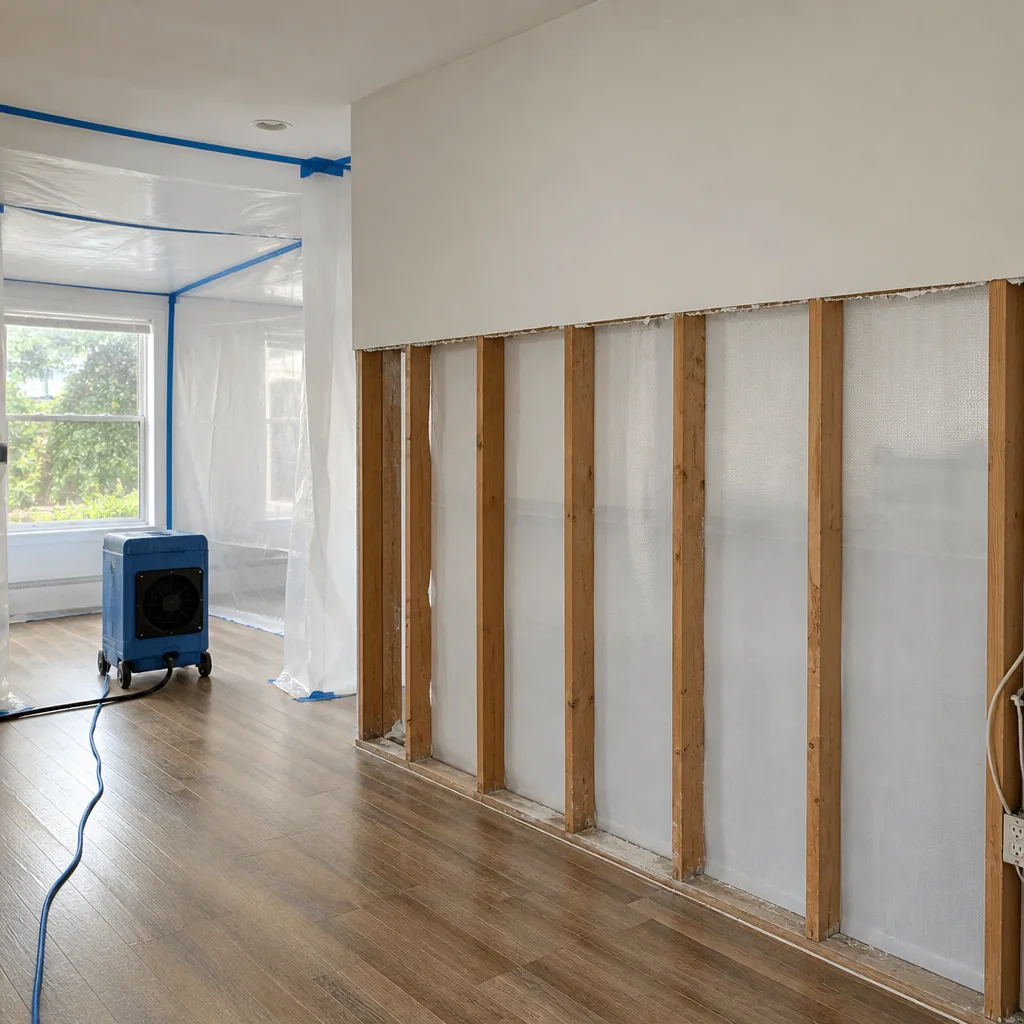
This is where Westchester differs from most of Miami-Dade. A gypsum board wall on a wood stud frame dries outward and inward predictably. A drywall interior face over a concrete block exterior wall dries differently. The block holds moisture longer and releases it into the wall cavity after you think the job is done. We take psychrometric readings, measuring the moisture in the air and the vapor pressure inside the wall, and compare them against the dew point. If the numbers say the block is still wet, the drywall stays off longer. Rushing this part leaves you with mold inside a wall you can’t see.
Trusted Brands We Service in Westchester
Most Westchester homes call us for the water damage, not the equipment, but people do ask what we run. We use Dri-Eaz dehumidifiers, Phoenix axial air movers, and XPOWER drying systems, the same gear commercial restoration crews use. We’ve also learned that older Westchester homes often have original supply lines and cast-iron drains that fail alongside the water damage, so our crews know where to source the parts that fit 1950s and 60s plumbing without waiting a week. Faster turnaround on parts means faster dry-out on your home.
See the difference
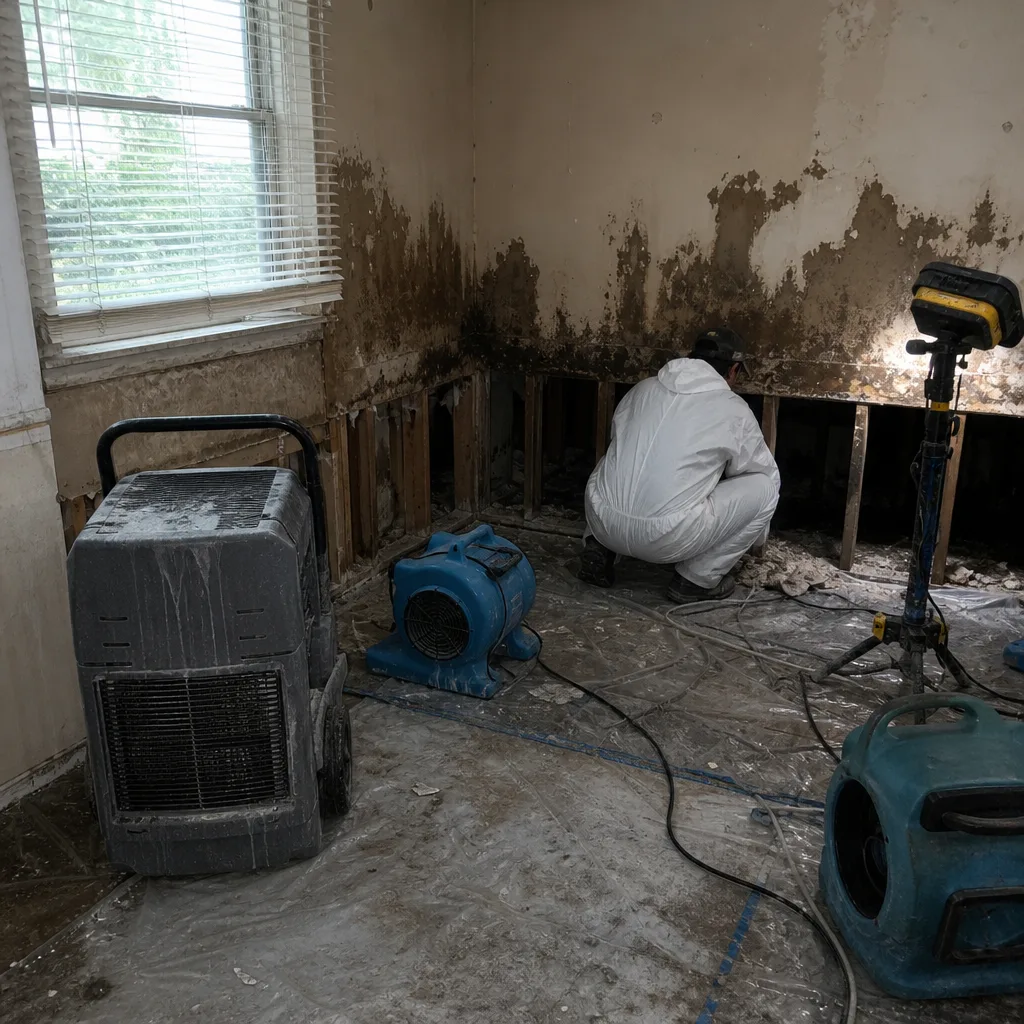 Before
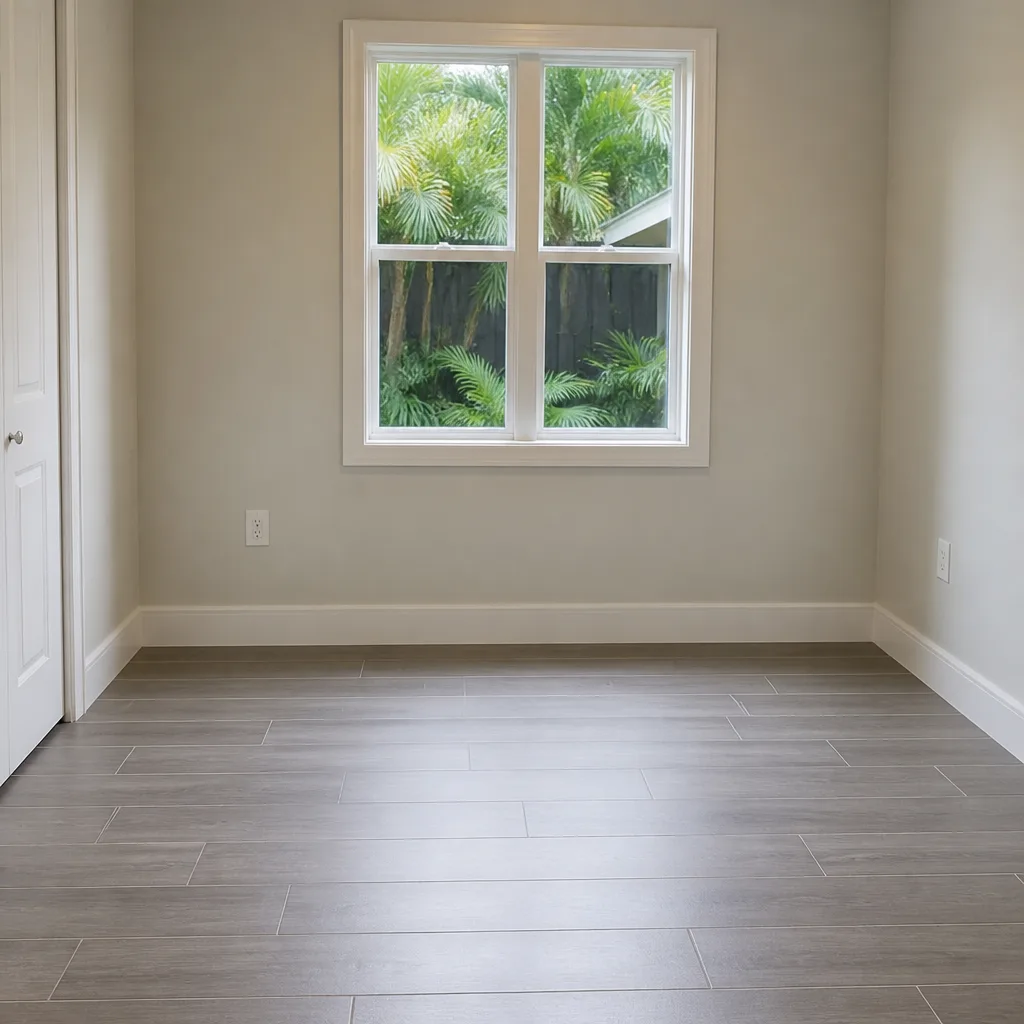 After
After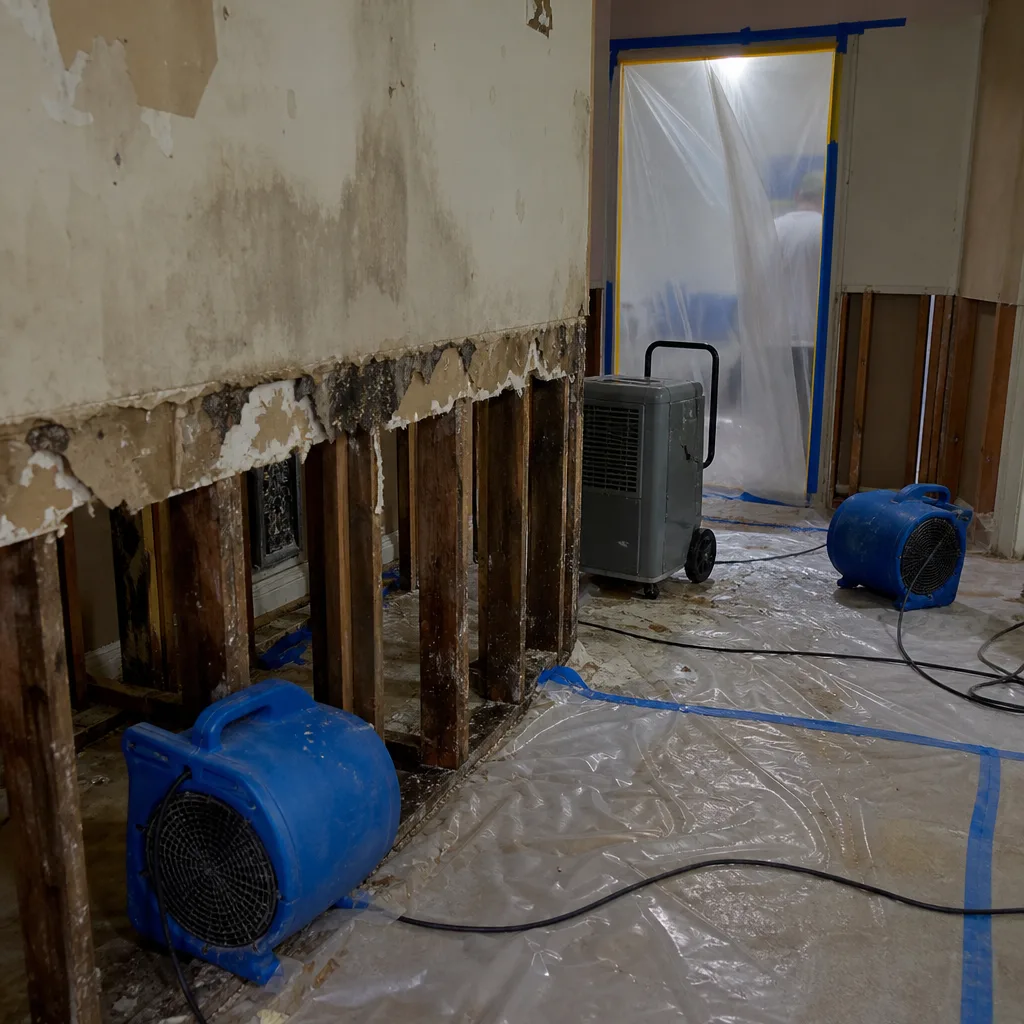 Before
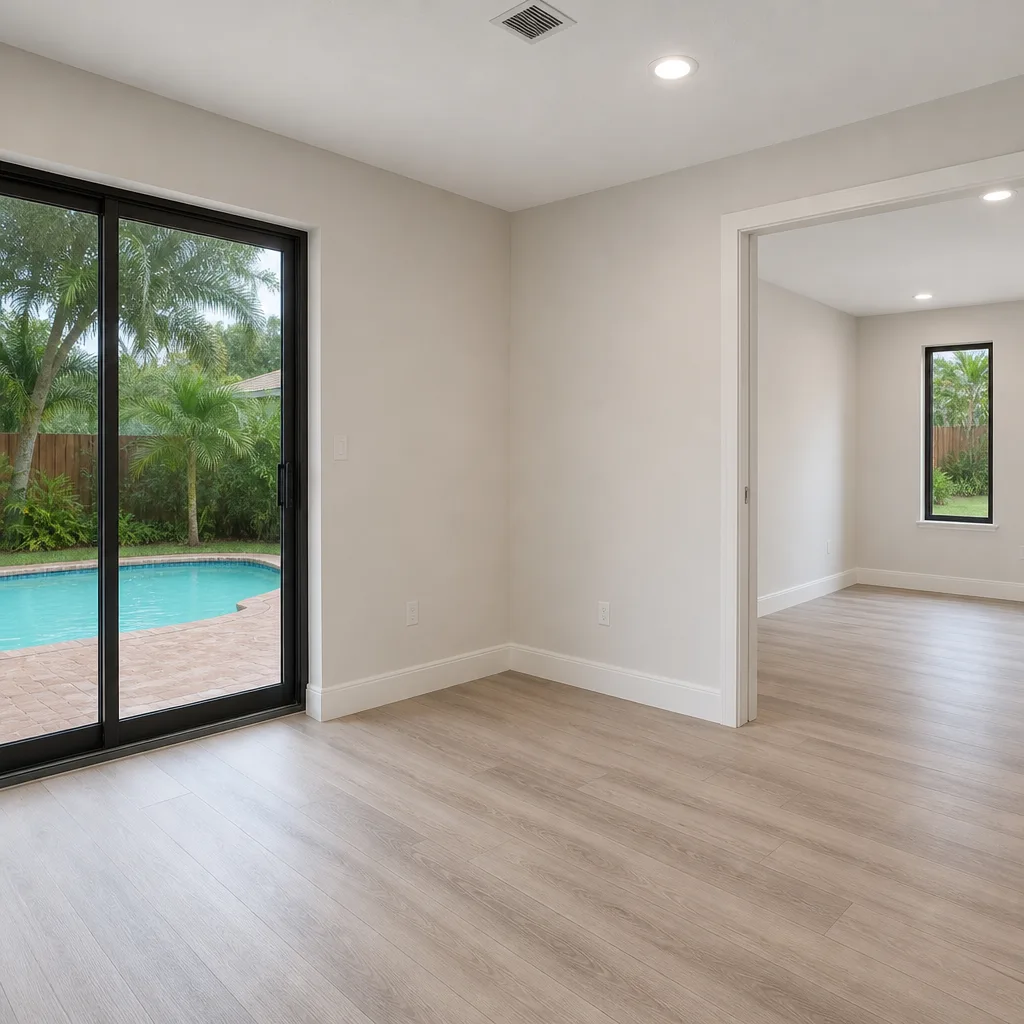 After
After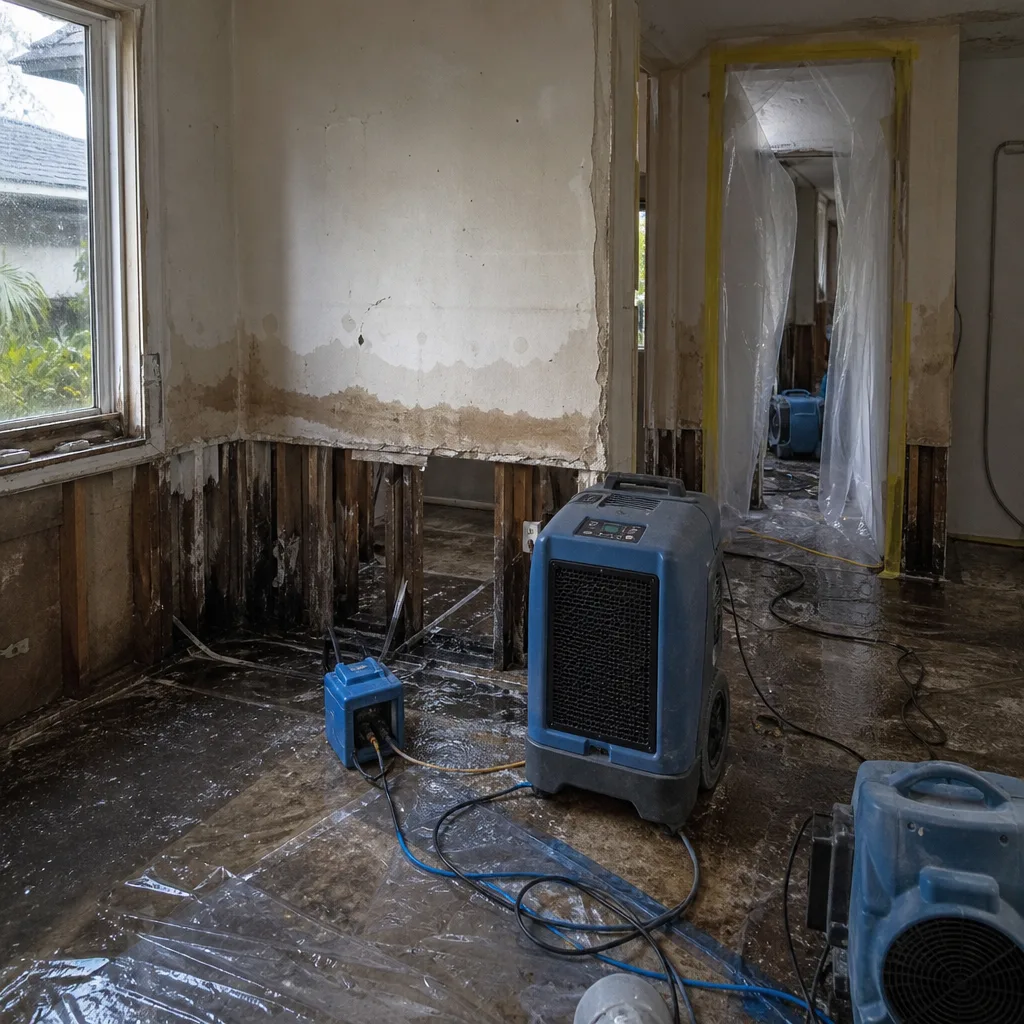 Before
 After
AfterCommon Water Damage Restoration Problems We See in Westchester Homes
- Flat-roof pooling and hairline cracking: Westchester’s low-slope roofs hold water after a downpour, and water sits there until it finds a micro-crack in the concrete deck, then works down through the stucco. You won’t see it until a stain appears on an interior ceiling, weeks after the storm.
- Concrete block wicking from slab leaks: When a slab under a 1960s home leaks, the concrete block walls pull that water upward through capillary action. Drywall looks fine on the face, but the backing paper is feeding mold. Moisture meters catch this before it becomes a visible problem.
- Category 1 water degrading in place: A clean supply line leak is category 1 water. Left alone in a warm, humid Westchester house for 24 to 48 hours, it degrades to category 2, which means bacteria are multiplying. If it sits long enough to interact with building materials, it’s a category 3 job and the scope doubles.
- No modern drainage or waterproofing: Original 1950s to 70s construction rarely included perimeter drains or vapor barriers that modern code requires. When wind-driven rain hits the stucco at the right angle, water penetrates the block and collects inside the wall cavity, where it stays until someone opens the wall.
Pricing for Water Damage Restoration in Westchester, FL
Most residential water extractions in Westchester run $650 to $1,900, with structural drying adding $1,000 to $3,000 depending on the number of rooms and days of equipment. A flooded lower-level or utility room with category 3 water runs $2,800 to $6,500 start to finish, including containment, antimicrobial treatment, and drying logs. A roof leak that’s been seeping for weeks and now needs drywall removal, drying, and reinstallation usually lands between $2,200 and $5,400. You get a written price before any work starts, and if the price needs to change, you sign off before we touch anything else. Call (689) 888-7601 for a free estimate on your specific situation. We’ll send a photo and name of your technician before they arrive.
We Also Serve Cities Near Westchester
While this page focuses on Water Damage Restoration in Westchester, our crews also handle calls throughout the surrounding area. We work regularly in Miami, Miami Beach, Hialeah, and North Miami, and the same Threshold Verified protocol applies to every job: background-checked, photo-badged technicians, a written price, and a 365-Day Done Right Promise printed on the work order.
Serving Westchester, FL - Our Local Coverage Area
We’re based in the Westchester area and know this community well. Use the map below to see our service coverage - if you’re nearby, we can almost certainly help.
FAQs About Water Damage Restoration in Westchester
In Westchester’s climate, hidden moisture behind drywall can support mold growth within 24 to 48 hours because the interior wall cavity stays warm and humid while the concrete block holds moisture against the drywall backing. We check for elevated moisture readings on every affected wall, not just the visibly wet ones. Call (689) 888-7601 if you suspect water behind a wall, and we’ll schedule a moisture assessment.
Yes. Flat-roof leaks in Westchester homes require drying the concrete block deck and the wall cavities below the leak path, not just the drywall face, because water travels through hairline cracks in the concrete and saturates the block. A pitched roof sheds water away from the structure; a flat roof lets it sit and penetrate. Our drying plans for flat-roof leaks in Westchester always include masonry moisture checks.
Storm-driven leaks in Westchester are typically category 2 or category 3, because rainwater and runoff carry contaminants from the roof, gutters, and ground. If the water entered through a crack or pooled on the roof before entering, treat it as potentially contaminated until assessed. We test and document the category before setting the drying plan.
Yes, in most cases. We dry concrete-block walls from the interior side by removing the wet drywall, exposing the block face, and running dehumidifiers and air movers across the masonry until moisture meters confirm the block is dry. The stucco exterior stays in place. Removing stucco is only necessary if the exterior has structural cracks that need repair to prevent re-entry.
We use thermal imaging to identify cooler areas where moisture has saturated the drywall, then confirm with moisture meters that read at multiple depths within the wall. In Westchester, we pay particular attention to the baseplate channel along the slab and any area below a flat-roof penetration like a plumbing vent or AC chase. If readings are elevated, we open the wall and inspect the block directly. Call (689) 888-7601 to schedule a post-storm moisture check.
Written by Tobias Reyner, Owner at Marsh Water Damage Miami, serving Westchester since 2005.