
 Water damage drying
 Fire & smoke cleanup
 Mold remediation
 Storm response
 Sewage cleanup
 Reconstruction
Free visual inspection and a written scope of work before any mitigation begins - photos, moisture readings, and drying logs go in your claim file
The scope we write is the scope we bill. Anything new gets shown to you, in writing, before we touch it.
Get your free estimateFast, Reliable Storm Damage Restoration Across Westwood Lakes
Storm damage in Westwood Lakes hits differently than it does in other South Florida neighborhoods. The 1950s and 1960s concrete-block ranches here sit low, close to the namesake lakes and canals, on lots where water has nowhere to go. When wind-driven rain pushes through jalousie windows or a flat roof channels water into a wall cavity, the real damage is invisible for days. We respond to Westwood Lakes within hours of your call, not days, because slab-on-grade foundations trap moisture and turn small leaks into saturated drywall. Call (689) 888-7601 and a live person answers, any hour, any weather.
Why Marsh Water Damage Miami Is Westwood Lakes’s Preferred Storm Damage Restoration Company
We have worked on enough Westwood Lakes ranches to know what is behind those walls before we cut into them. The homes here were built before modern floodplain codes existed, which means the original construction fights against drying instead of helping it. Our Storm Damage Restoration team carries moisture meters as standard equipment on every Westwood Lakes call, and we map wall cavities the way a doctor reads an X-ray. We also know the original galvanized supply lines and cast-iron drains common to this neighborhood, so when a homeowner reports a roof leak, we check the plumbing first. That saves you from paying to repair shingles when the actual problem is a pinhole leak in a 60-year-old pipe.
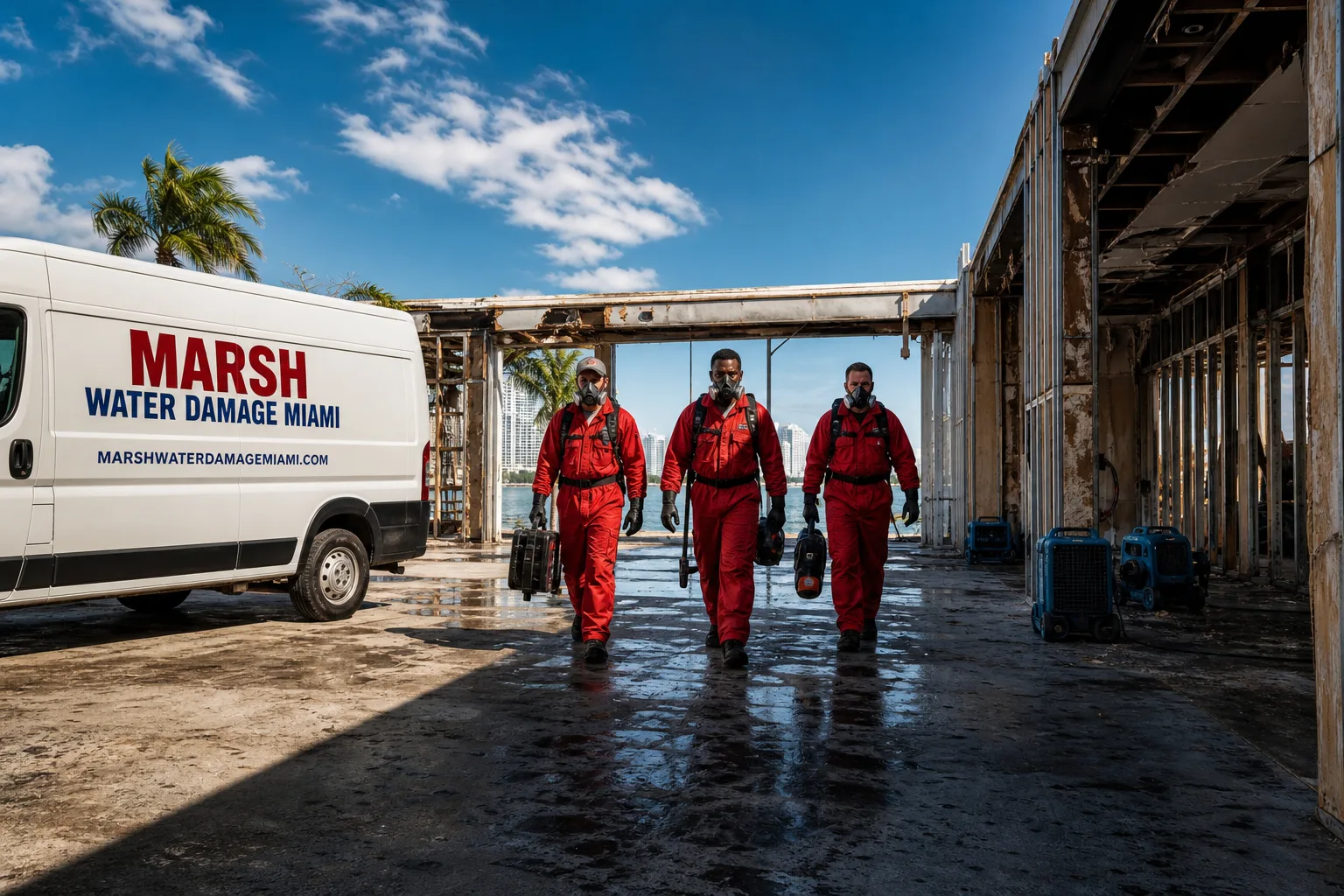
We serve all of Westwood Lakes, from SW 19th Terrace over to the canal-front properties near SW 22nd Street. Every technician who arrives at your door is background-checked, identity-verified, and sent to you by name and photo before the visit. Our Threshold Verified standard is not a marketing phrase. It is five steps printed on the work order: verification before dispatch, photo ID at the door, a written price before any work starts, a written guarantee, and a 365-Day Done Right Promise. If the repair fails within a year, we come back and make it right, free second visit included. Tobias Reyner, who leads our restoration team, insists on that because he has seen what a rushed drying job does to a slab foundation in this neighborhood.
Restoration work we handle
Basement Flood Cleanup in Westwood Lakes
Basement Flood Cleanup in Westwood Lakes is rare in the literal sense, because most of these 1950s and 1960s ranches were built without basements. What we see instead is water pooling against the foundation and wicking up through the slab into the lower drywall. When a canal overflows or a summer storm drops five inches in ninety minutes, the ground around your foundation becomes a reservoir that keeps feeding moisture into your home for days. In Westwood Lakes, most residential water extractions run between $1,800 and $3,400, depending on how much square footage is saturated and whether the water is clean or contaminated. Rapid extraction followed by aggressive dehumidification is what separates a two-day cleanup from a two-week gut job, and we set equipment the same day we arrive.
Slab-Water Wicking and Wall Cavity Drying
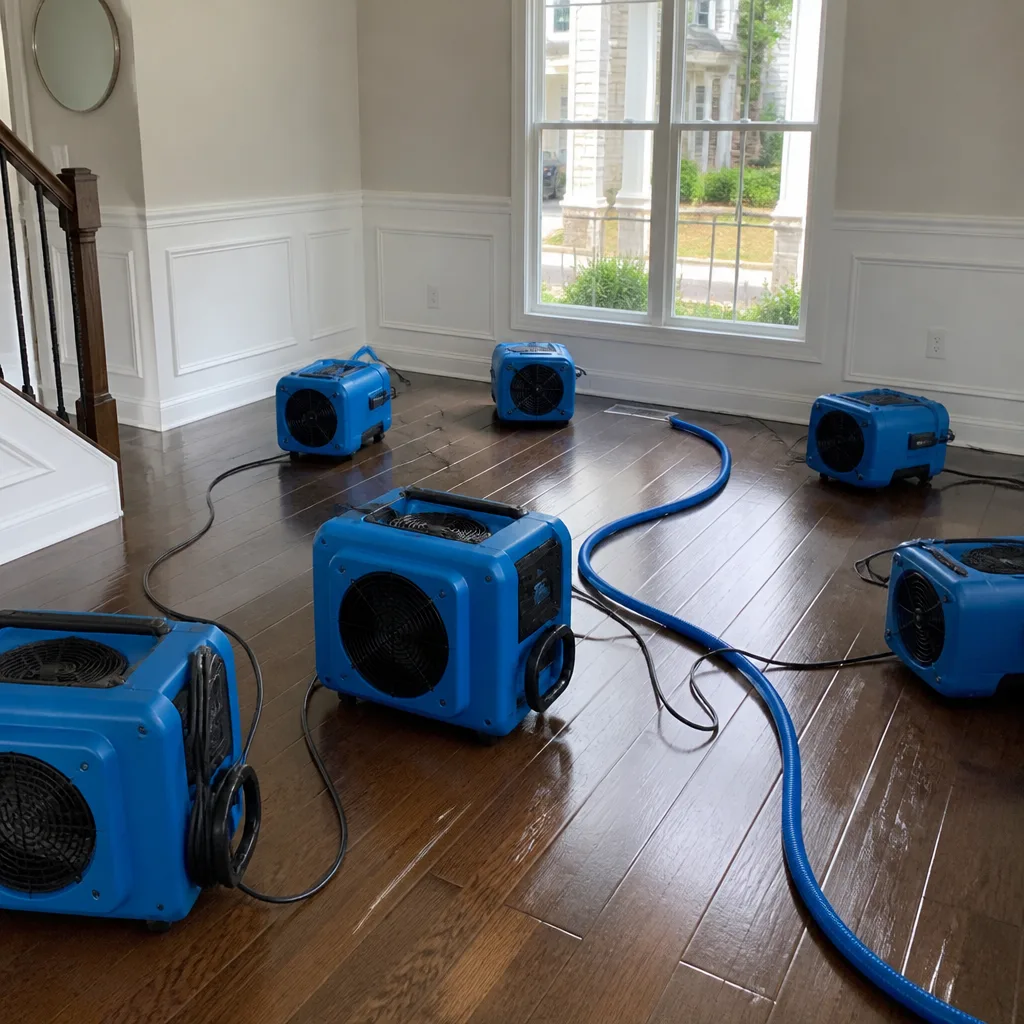
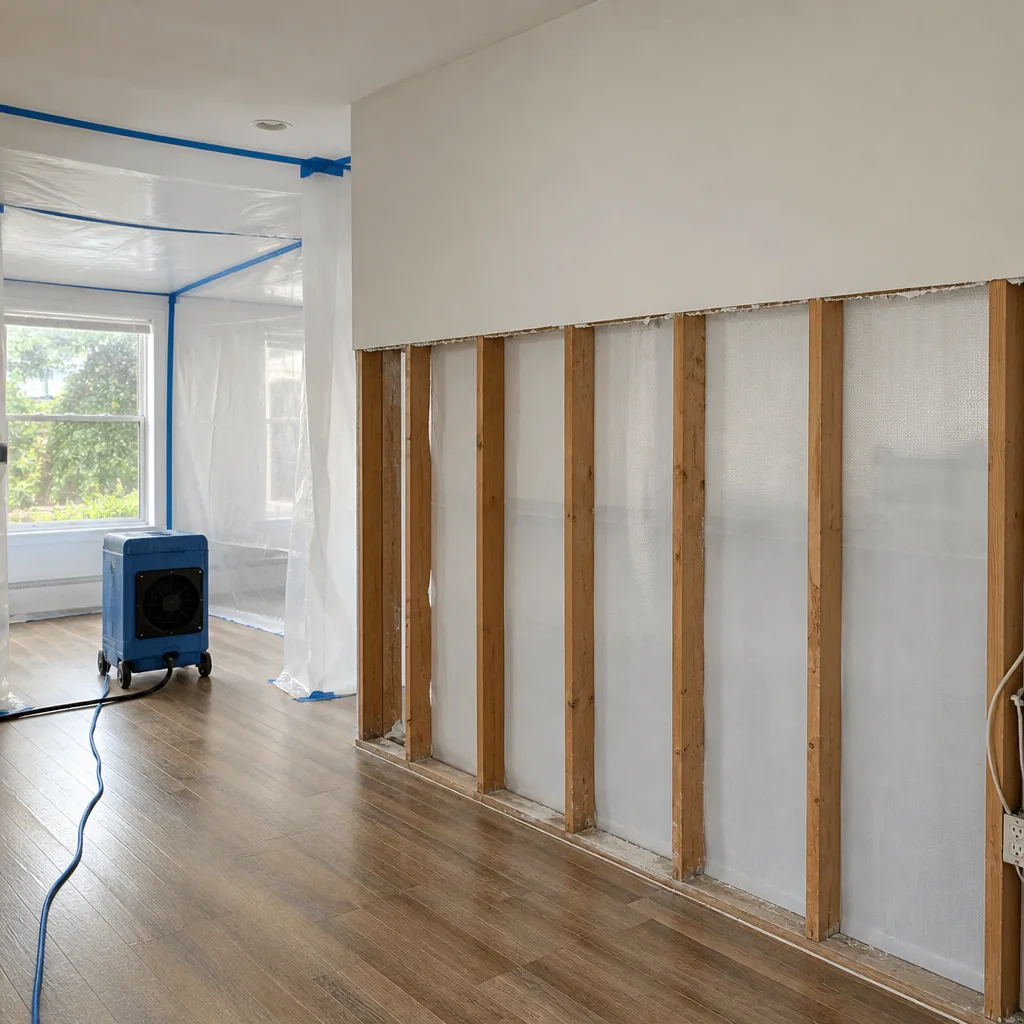
Water does not pool in a Westwood Lakes slab-on-grade home like it does in a northern basement. Instead, it wicks upward through the concrete and saturates the bottom few feet of drywall from the inside out. The visible signs are usually subtle: bubbling paint at the baseboard line, a damp smell that gets stronger in the evening, or baseboards that have started to separate from the wall. We take psychrometric readings (measuring the moisture in the air and inside materials) to map exactly where saturation stops, then cut only what is necessary. In most Westwood Lakes homes, we can save the upper drywall and original plaster work by targeting the wet zone with Injectidry panels and Dri-Eaz dehumidifiers.
When Extraction Alone Will Not Dry the Slab
Some Westwood Lakes foundations hold water longer than others, especially on lots near the canals where the water table sits high. If our initial readings show moisture deep in the concrete, we explain that drying equipment needs to run for four to seven days, not the 48 hours a surface-only contractor might promise. The 365-Day Done Right Promise applies here. If mold appears in the same wall three months later because the slab was not actually dried, we return and correct it.
Storm Damage Contractors in Westwood Lakes
Storm Damage Contractors in Westwood Lakes need to understand both weather and construction from the mid-20th century. A Category 1 hurricane passing offshore sends wind-driven rain sideways into these older homes, and original jalousie windows with minimal overhangs offer almost no resistance. The water that enters is usually Category 2 because it has run across roofs, through leaf debris, and down wall cavities. That classification matters for how we treat the affected materials. Most storm-related drywall removal and drying in Westwood Lakes runs between $2,200 and $4,500, and we provide a written scope with line-item pricing before any demolition begins.
Wind-Driven Rain Behind Jalousie Windows
Jalousie windows are a beautiful mid-century detail, but they were never designed to seal against horizontal rain. We regularly find that Westwood Lakes homes with original jalousies have water staining inside wall cavities adjacent to the window frames. Our techs remove the base trim, drill small inspection ports, and check humidity levels inside the cavity before recommending any drywall removal. In many cases, we can dry the cavity in place with directed airflow from XPOWER air movers and avoid tearing out finished walls.
Flat Roof Channeling and Hidden Ceiling Saturation
Original flat or low-slope roofs on Westwood Lakes ranches collect water during heavy storms, and even a small clog in an old drain line can send water pouring into an unvented attic. Because many of these attics have no airflow, the tongue-and-groove ceiling boards below absorb moisture from above. Drying logs that stop when the visible ceiling feels dry miss the fact that the attic still sits at 70% relative humidity or higher. We run dehumidification in the attic space itself, not just the living area, and we keep monitoring until our psychrometric readings confirm the entire structure is below the mold-threshold range.
Trusted Brands We Service in Westwood Lakes
We stock and service a full range of restoration equipment for Westwood Lakes jobs, including Phoenix dehumidifiers and XPOWER air movers. When a previous contractor left drying equipment that failed or never finished the job, our technicians can assess and continue the work using the same professional-grade gear. We also keep Injectidry drying panels available for slab and wall cavity applications, which are essential given how many Westwood Lakes homes have no crawlspace. If you have a restoration project underway and the equipment shut off or the readings never stabilized, call us. We will send a tech who reads the existing drying logs, takes fresh moisture readings, and gives you a clear written recommendation.
See the difference
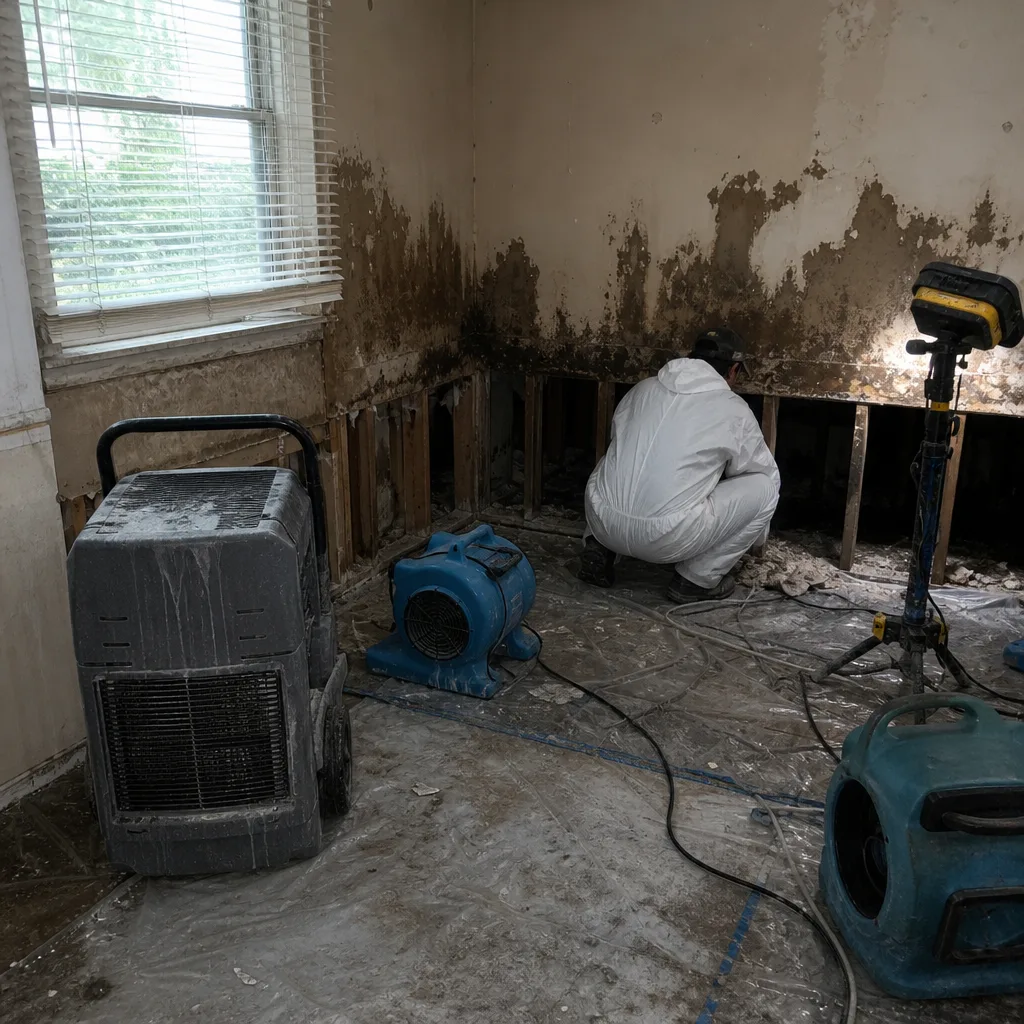 Before
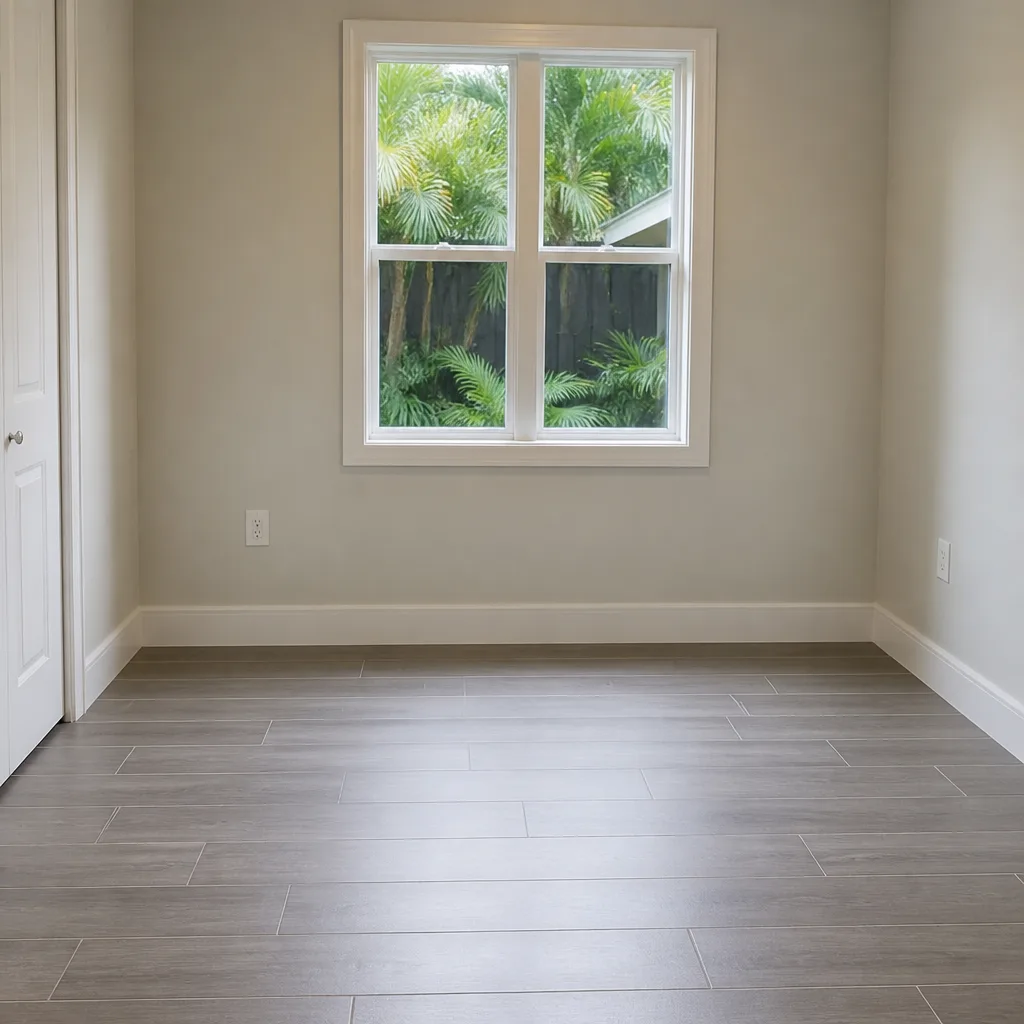 After
After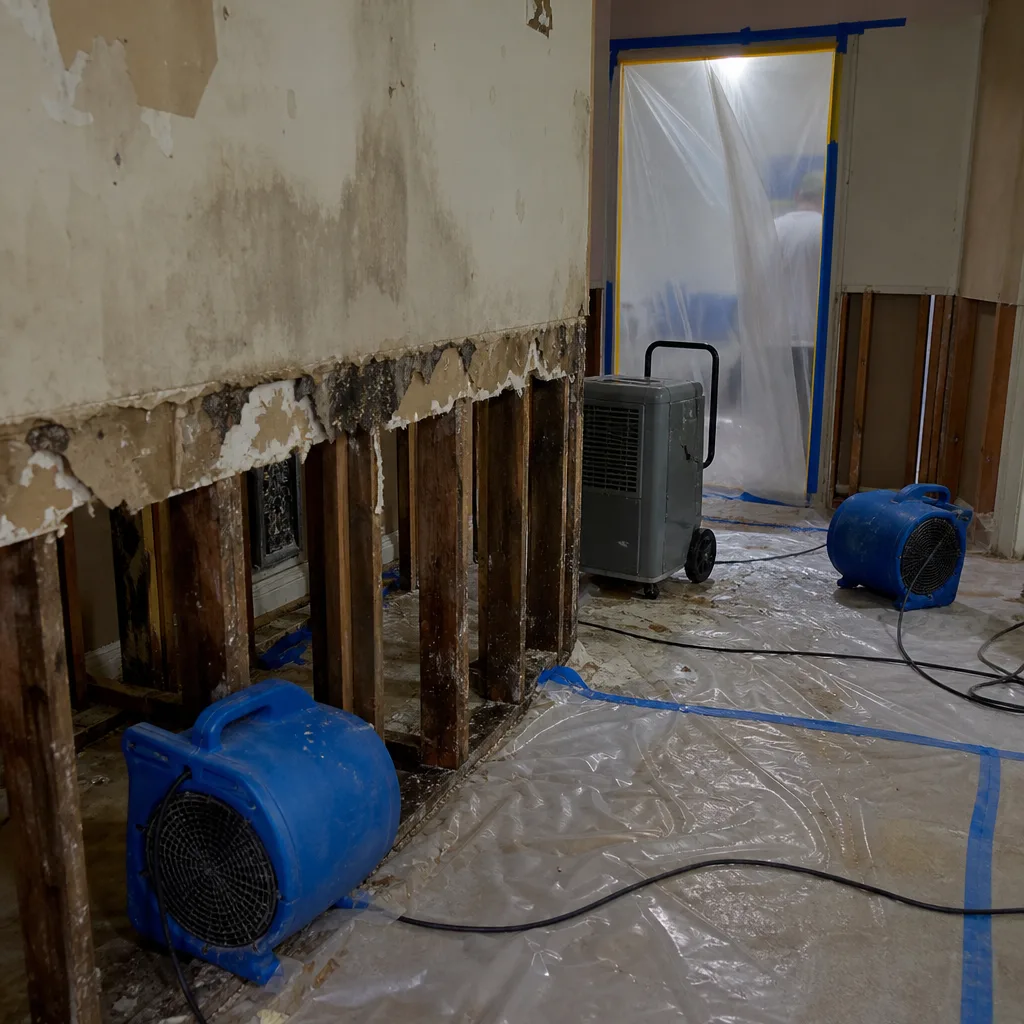 Before
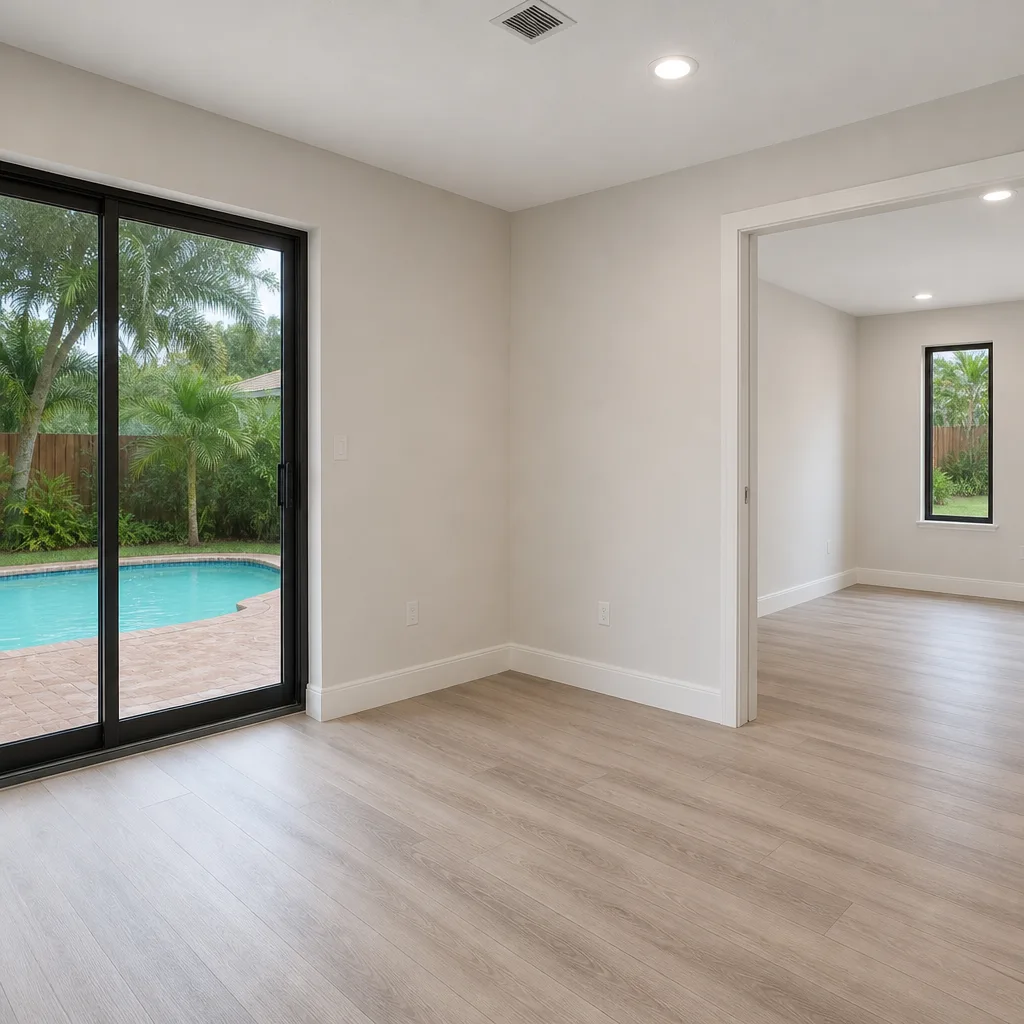 After
After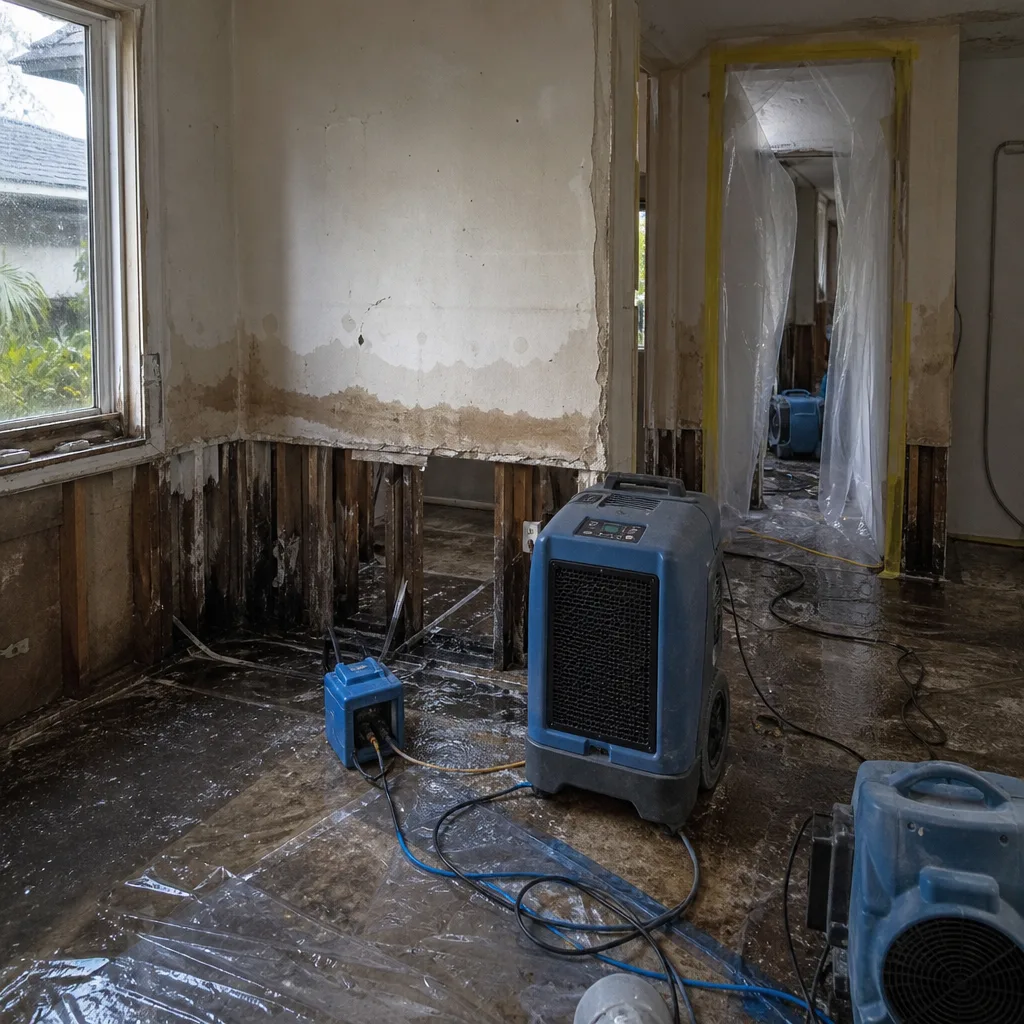 Before
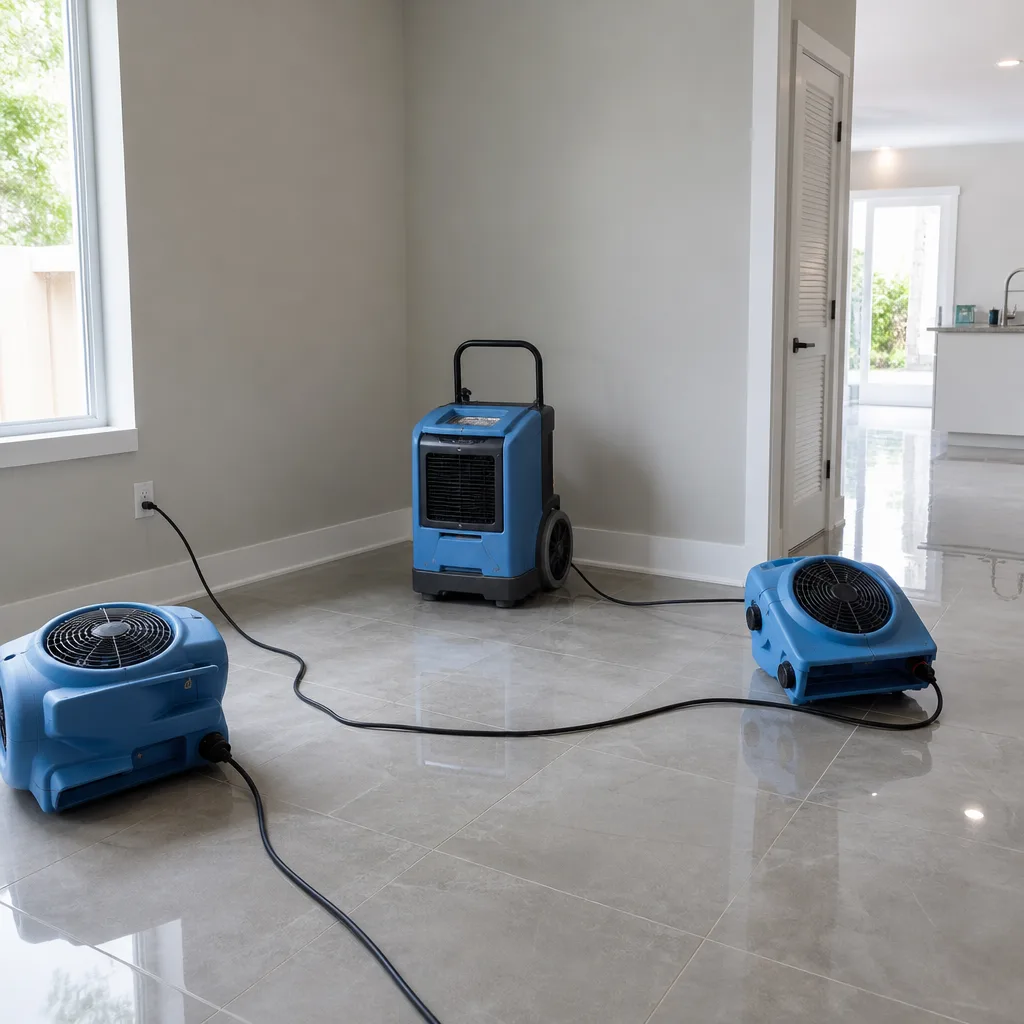 After
AfterCommon Storm Damage Restoration Problems We See in Westwood Lakes Homes
- Hidden saturation in wall cavities above slab foundations: Water that enters through a window or roof channel collects at the base of the wall, then wicks upward into the drywall from behind. Surface moisture meters show a dry wall while the cavity underneath holds 90% humidity. We map every cavity before we write an estimate.
- Category 2 contamination misclassified as clean: Storm water that runs across roofs, gutters, and leaf debris is rarely Category 1. When a contractor treats it as clean, they skip the antimicrobial treatment that prevents mold from taking hold inside the wall. We classify correctly and document it in your written scope.
- Unvented attics holding moisture after the visible leak stops: Many Westwood Lakes attics have no soffit vents or ridge vents, so moisture trapped there from a roof leak lingers for weeks. Ceiling boards swell, paint peels, and mold grows even though the roof is now dry. Our drying protocol includes attic dehumidification on every storm job where the roof was involved.
- Original galvanized pipes failing under storm stress: When wind shifts a 1960s ranch even slightly, old galvanized supply lines can crack at the joints. What looks like roof damage is often a plumbing failure that soaked the wall from the inside. We coordinate with licensed plumbers and restoration crews so the entire problem gets fixed, not just the visible part.
Pricing for Storm Damage Restoration in Westwood Lakes, FL
You deserve real numbers before you decide who to call. In Westwood Lakes, a basic water extraction with four to six days of drying equipment runs $1,800 to $3,000 for a single room. If storm water requires drywall removal, antimicrobial treatment, and rebuild-ready drying, expect $2,500 to $4,500 for a typical 1,500-square-foot ranch. Jobs involving slab saturation, full attic drying, or widespread Category 3 contamination from canal overflow start at $5,000 and go up based on square footage. Every estimate is written, line-itemed, and agreed before any work begins. No one from Marsh Water Damage Miami will ever open a wall before you approve the number on the work order.
We Also Serve Cities Near Westwood Lakes
Our restoration crews cover the surrounding communities including Miami, Miami Beach, Hialeah, and North Miami. If you have storm damage and are unsure which service area you fall under, call and we will confirm coverage and dispatch time while you are on the phone. The same Threshold Verified process applies everywhere we work.
Serving Westwood Lakes, FL - Our Local Coverage Area
We’re based in the Westwood Lakes area and know this community well. Use the map below to see our service coverage - if you’re nearby, we can almost certainly help.
FAQs About Storm Damage Restoration in Westwood Lakes
Original galvanized supply pipes in Westwood Lakes homes develop pinhole leaks after 50 years of South Florida water chemistry, and wind pressure from storms can be the final stress that opens a joint. When a pipe inside a wall fails, the staining pattern looks almost identical to a roof leak: water along the baseboards, paint bubbling near the ceiling line, and a damp smell. It does change the scope, because a plumbing failure is Category 1 clean water if caught early, while a roof leak that has run across debris is often Category 2. That difference determines whether we can dry the drywall in place or have to remove and replace it. We check plumbing integrity on every Westwood Lakes storm call before we touch the roof or the drywall. Call (689) 888-7601 and describe where the staining is. We will tell you what to check while you wait.
We dry the slab from the top down using Injectidry vacuum panels placed directly against the wet wall and floor areas, combined with Dri-Eaz dehumidifiers running continuously inside the affected rooms. Without a crawlspace, evaporation from the concrete surface is the only route for moisture to leave the slab, which is why this takes four to seven days in Westwood Lakes rather than 48 hours. We take psychrometric readings daily and adjust equipment placement as the moisture profile shifts. We do not pull equipment early just because the surface feels dry to the touch. The drying log comes with your job file, so you can see the readings yourself.
Category 1 means clean water from a supply line or indoor source. Category 2 is gray water, meaning it picked up dirt, debris, or roof runoff on its way in, and Category 3 is black water, which includes canal overflow, sewage, and storm surge. In Westwood Lakes, wind-driven rain through a window or roof leak is usually Category 2 because the water traveled across exterior surfaces. Category 2 requires antimicrobial treatment and often removal of the bottom 2 feet of drywall. Category 3 requires full removal of all saturated materials and disposal under proper handling procedures. We classify the water before we write your scope, and we document the classification with photos in your job file.
Humidity, not liquid water, is what triggers mold in unvented Westwood Lakes attics. After a heavy storm, exterior humidity drives upward through the ceiling and into an attic with no airflow, where it condenses on the underside of the original tongue-and-groove ceiling boards. We prevent this by placing dehumidifiers in the attic space itself, sealing soffit areas where needed, and monitoring RHA (relative humidity in the air) until it stays under 60%. This usually takes three to five days. If the attic already shows visible mold growth, we include a mold remediation scope in the same work order, not a separate surprise invoice.
Storm damage restoration in Westwood Lakes runs $1,800 to $3,000 for basic extraction and drying, $2,500 to $4,500 when drywall removal and Category 2 treatment are required, and $5,000 or more for slab saturation, attic drying, or Category 3 contamination. We do not give one flat price because no two storm jobs are identical: a 1962 ranch on a canal lot needs different equipment and more drying time than a 1970s ranch on higher ground three streets over. What we do give is a written line-item estimate before any work starts, so the price you approve is the price you pay. Call (689) 888-7601 for a free estimate.
Written by Tobias Reyner, Owner at Marsh Water Damage Miami, serving Westwood Lakes and surrounding South Florida communities since 2005.